Cheap RV storage: how I cut my bill without parking in a dirt field
By Dale Pruitt · October 11, 2026 · updated October 13, 2026
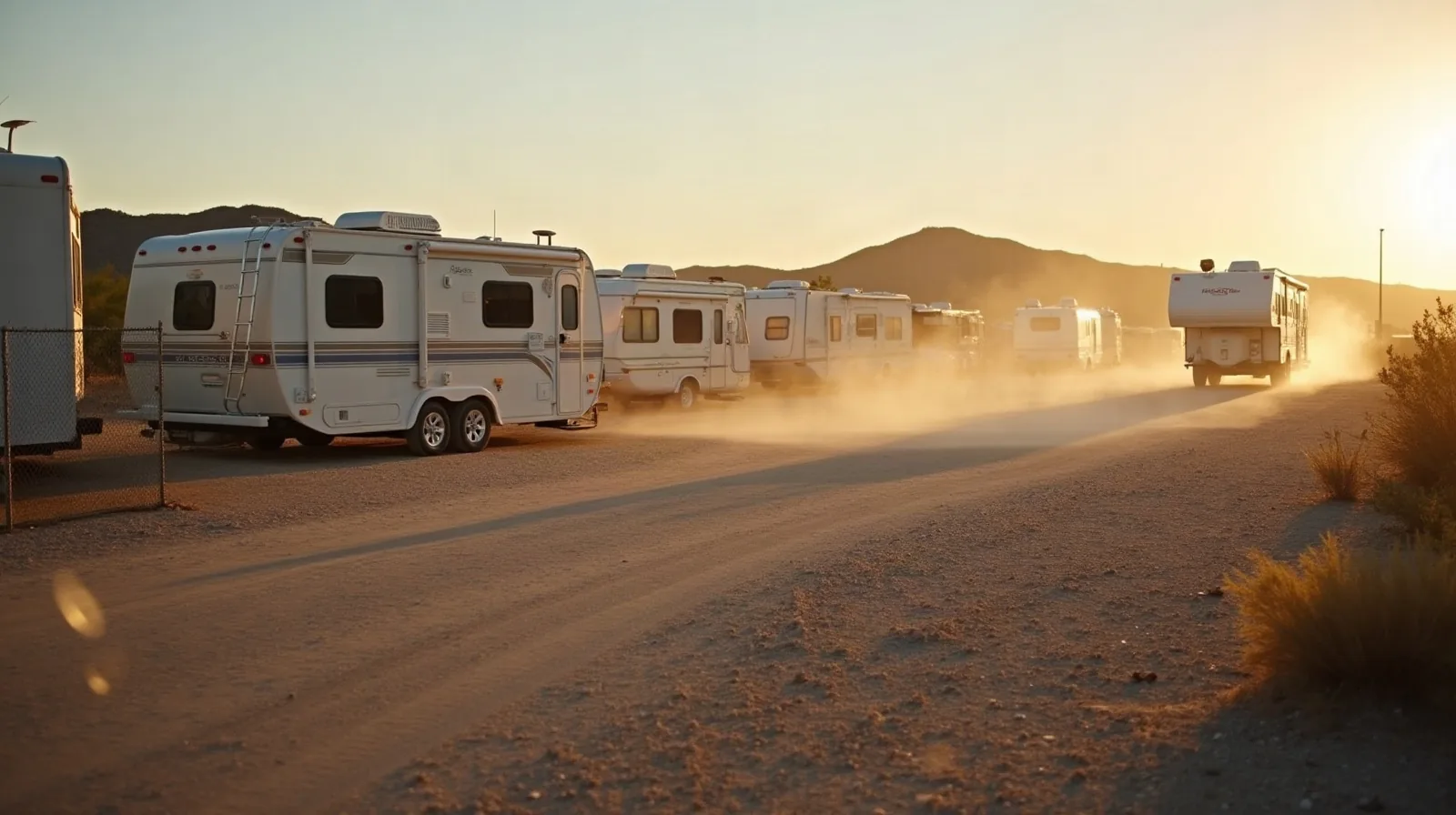
I started keeping a notebook in July 2016. That month I parked my 2014 36-foot diesel pusher on a gravel lot off Val Vista Road in Mesa and paid $65 a month. Two summers later the same coach sat under a canopy on Country Club Drive for $220. Every rate change, every fee, every gate code went in the notebook. It turned into my guide to cheap RV storage. After comparing the actual RV storage in Mesa by monthly rate I figured out the trick. Drive 25 minutes east. Read the fine print.
Why cheap RV storage usually means leaving town
Drive 15 to 30 minutes out toward Queen Creek or Apache Junction and the same canopy space drops to $75 to $150. In-town lots charge for the dirt they sit on. A covered 40-foot space in central Phoenix runs $150 to $300 a month.
The trade is time. I spend 45 minutes round-trip when I fetch the coach. So figure two tanks of diesel a year against $1,800 in rent. I take that deal every season.
For a comparison of open-lot rates inside the metro, I look at the Phoenix open-lot storage page whenever our winter spot fills up.
Pick the right space: open lot, canopy, or indoor?
An open gravel spot is the cheapest option, $30 to $150 a month in most markets. My first two summers, I paid $65 then $75. The sun cooked the roof; I replaced a vent cover every spring.
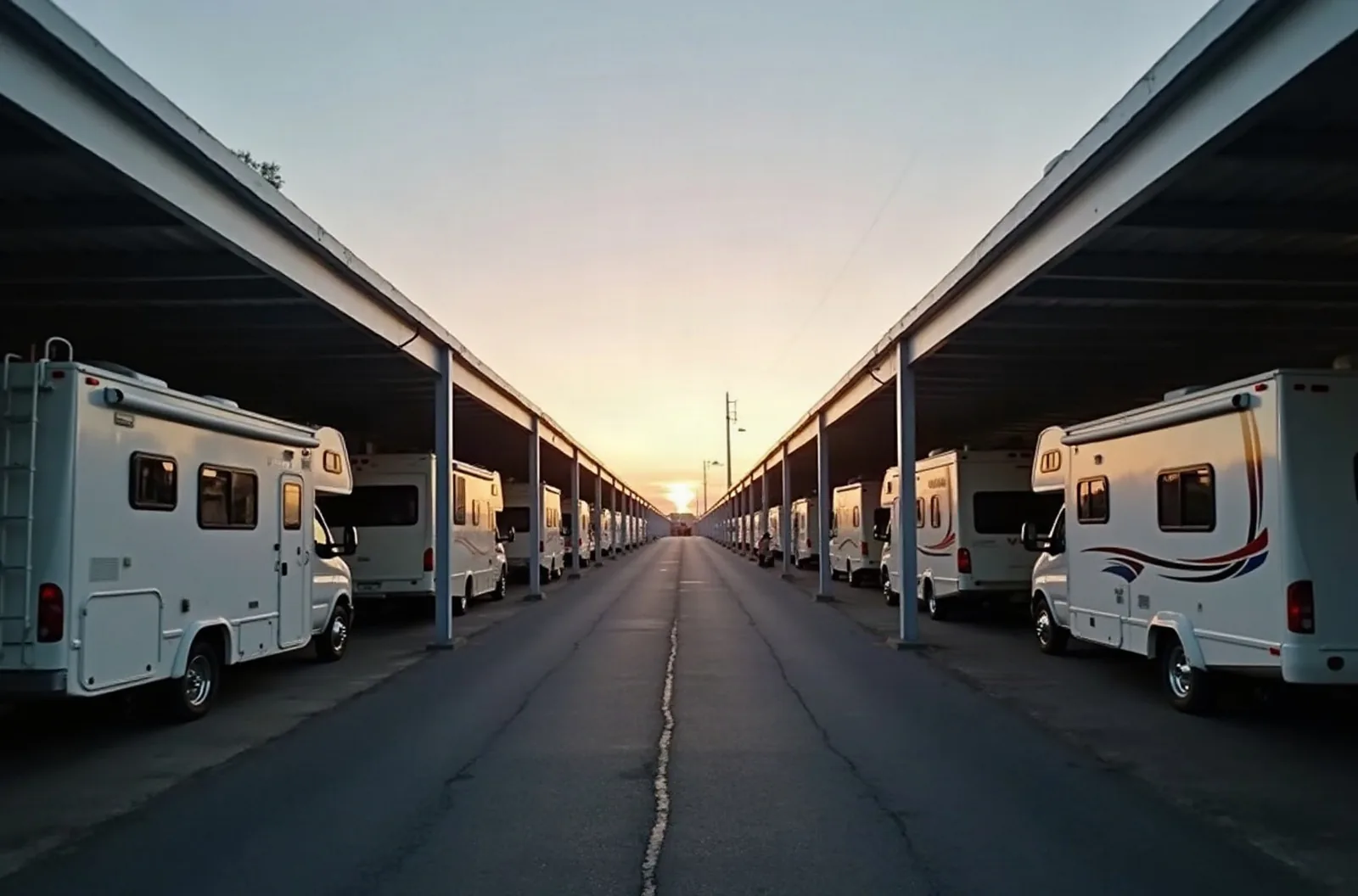
A covered canopy runs $75 to $300 a month. The metal roof blocks most UV, wich matters in Arizona. I moved under a canopy in 2018 and stopped buying vent covers.
Indoor units cost $150 to $450 a month and up. You’re paying for four walls and a roll-up door. If you store a 40-foot Class A, the unit may run higher.
My roof is original and still holds water after eight years under a canopy, which is more than I can say for the vent covers I bought before it.
We break down more of that trade in our post on outdoor vs covered vs indoor RV storage.
How I cut my bill with prepay and move-in specials
I prepay six months in November and get a free month at my current lot. That drops the effective rate from $145 to abotu $121 a month, plus no admin fee. Facilities love cash upfront.
Ask three questions before you sign:
- Do you waive the admin fee for prepay? Many do.
- What’s the move-in special this month?
- Can I lock the rate for 12 months if I prepay a year?
I got my current canopy spot with a spring special that gave the first month free and half off the lock they sell at the office. I bought the lock, used it, still have it.
I watched this video before my last move and it covered the basics better than any brochure.
Cheap RV storage can get expensive in month seven
The in-town canopy spot I used from 2018 to 2020 started at $185 a month. Month seven, a letter showed up in my mailbox: $210. Month thirteen, another letter: $225. No reason given. The gate code still worked fine.
Read the contract before you sign. Look for the rate-change clause. Most require 30 days written notice. Some say they can raise rent after six months. That’s legal, and common.
What I do now: I take a photo of the rate page with my phone before I sign. I circle the month-to-month cancellation notice, usually 14 or 30 days. And I ask the manager, in person, how often the lot raises rates. If they squirm, I walk.
One summer I dropped collision through a storage option my insurer offered, saving $93 a month while keeping comprehensive.
For a full breakdown of monthly prices by type, see our RV storage cost guide.
Check the gate, the gravel, and the lights before you pay
Here’s my five-minute inspection:
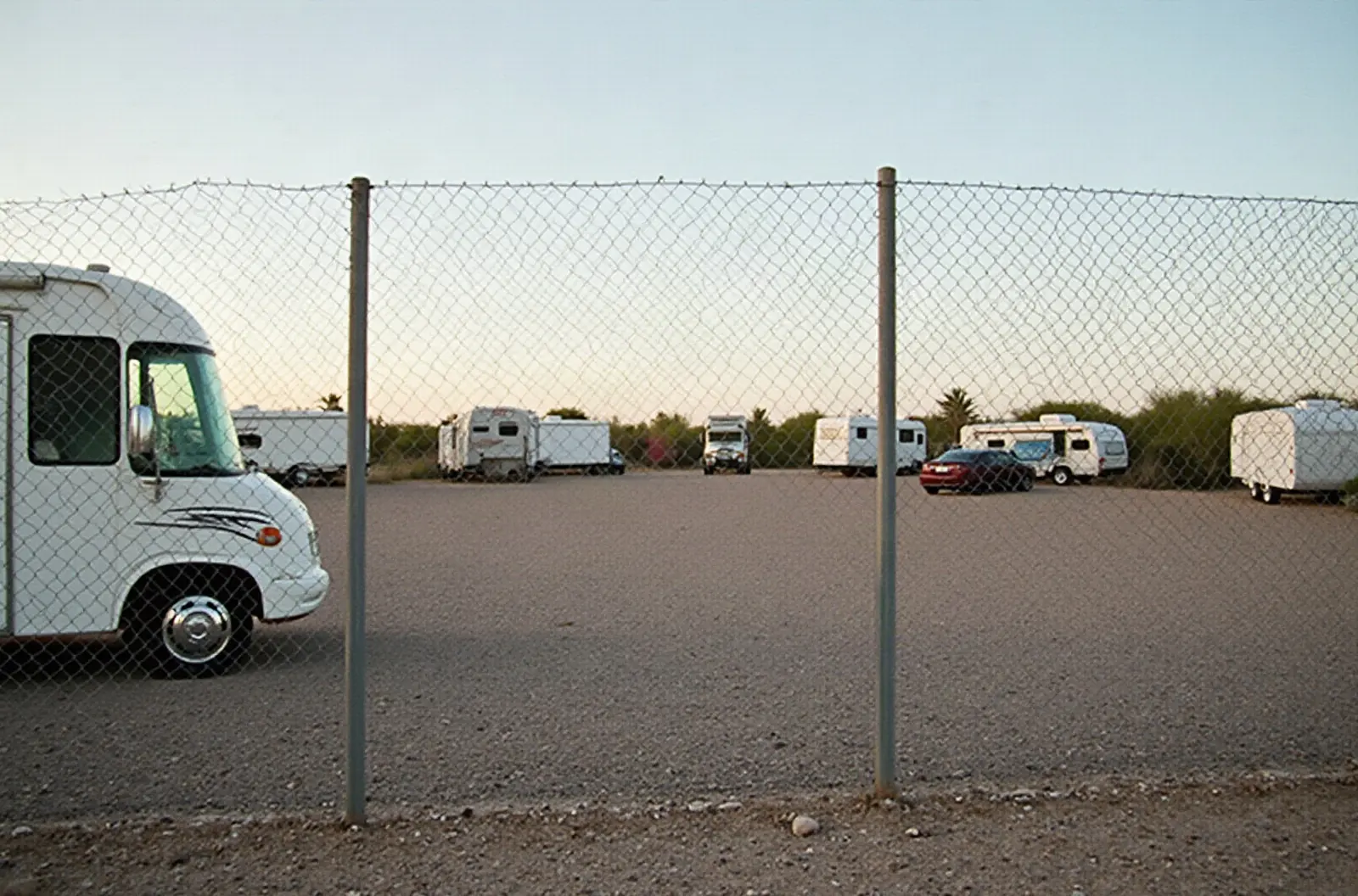
- Gate: does it close fully and require a code? Test it twice.
- Surface: gravel is fine, but is it graded? After a monsoon, does water stand where your tires will sit?
- Lighting: one dim floodlight at the office don’t cover a 300-foot row.
- Turning room: a 36-footer needs about 60 feet to swing in. Pull-through beats back-in every time.
- Manager: is there one on site? A live human means someone notices a flat tire or a broken lock.
I stood in two inches of water on a gravel lot in July 2017 after a storm. My tires sat in mud for a week. That spot cost $70 a month. I moved the next season to a paved lot with a working gate and paid $85. Worth every dollar.
Peer-to-peer and campground storage: the hidden cheap options
Private land through a listing site like Neighbor can run $40 to $100 a month for a driveway or pasture spot. The catch is no gate, no cameras, no contract. You trust a stranger with a fence.
A dozen RV parks around Phoenix store rigs off season. One in Gold Canyon charges $55 a month for a gravel space from May through October. The catch is you must be out by November 1, no exceptions.
My rule: cheap is fine, but the rig has to stay insured with comprehensive, and I photograph the coach inside and out on drop-off day with my phone. Dated photos win claims. Without them, your insurer starts asking questions you can’t answer.
Cheap RV storage costs less when the rig is prepared right
Skip this and you pay later. A friend in Flagstaff learned that with a cracked water line from a freeze. $900 in repairs. I winterize in Phoenix because nights drop below freezing in January.
My routine takes about two hours:
- Dump black and gray, drain the fresh tank, pull the anode rod from the water heater.
- Bypass the heater, pump in 2 to 3 gallons of pink RV antifreeze.
- Pour a cup into every P-trap and the toilet bowl.
- Pull the battery disconnect and clip on a maintainer. I leave the flooded lead-acid battery in place but disconnected. A dead battery freezes near 32°F; a charged one survives much colder.
- Fill the diesel tank, add stabilizer, and close the propane valves.
- Cover the tires. Arizona sun kills sidewalls in five years even if the tread looks new.
If you skip winterizing becuase the space is heated indoors, remember: heaters fail, and a week without power in a cold snap freezes a water line faster then you’d believe.
Measure your rig, then call three lots
Everybody quotes the brochure length. My 2014 36-footer is actualy 38 feet 4 inches bumper to ladder. That cost me a $40 a month upcharge once because I fit a 40-foot space, not a 35-footer.
So this weekend, take a steel tape and measure your RV. Bumper to tip, including the spare tire and the the bike rack. Then call three storage lots within 30 minutes of your house. Ask for a 38-foot space, not a 36.
I’d start with open-lot and canopy options. Tell them you’ll prepay six months and see what they knock off. If the first rate they quote is the only rate, hang up and call the next one.
Related reading
FAQ
What's the cheapest way to store an RV?
An open gravel or dirt lot 15 to 30 minutes outside town, prepaid for six or 12 months, is usualy $30 to $150 a month. A private driveway through a peer-to-peer site may beat that. In sunny climates, compare the cost of UV damage against a canopy space at $75 to $300.
How much does covered RV storage cost per month?
Open-sided canopy or carport storage runs roughly $75 to $300 a month nationally, with $100 to $200 common. Rates climb for 40-foot Class A coaches. Indoor units run $150 to $450, and climate-controlled indoor can hit $300 to $700. Local rates vary alot.
Is RV storage worth the money?
For a $100,000-plus coach, paying $100 to $200 a month for covered storage often pays for itself by slowing roof sealant and tire deterioration. Open lot is fine if you prepare the rig and accept sun damage. Weigh annual storage cost against the cost of repairs you'll skip.
Do you need insurance for a stored RV?
Most facilities require proof of insurance. Comprehensive coverage covers parked risks like theft, fire, hail, and windstorm. Many insurers offer a storage or lay-up option that suspends collision and sometimes liability. Check state rules before dropping liability on a motorized rig.
How do you prepare an RV for outdoor storage?
Winterize if freezing is possible: drain tanks, bypass the water heater, add RV antifreeze, pour some in drains. Disconnect or maintain the battery, close propane valves, add fuel stabilizer, and cover tires. Remove all food and seal gaps to keep mice out.
Why do storage facilities raise rent after six months?
Many self-storage companies use introductory rates that rise after several months, relying on move-out friction. Read the rate-change clause; most require 30 days written notice. Prepaying and asking for a locked rate for 12 months can prevent a surprise.
How do I find cheap RV storage near me?
Compare at least three lots within 30 minutes of your home. Look at open-lot and canopy spaces, ask about prepay discounts and move-in specials, and check peer-to-peer listings. Measure your RV's actual length before you call so you don't pay for a bigger space.
Find storage near you
Compare covered, indoor and open RV storage in your city, then ask a few places for their current monthly rate.
Browse by state