RV storage ideas: 9 places to keep a travel trailer when the HOA says no
By Rhonda Keel · September 29, 2026 · updated October 1, 2026
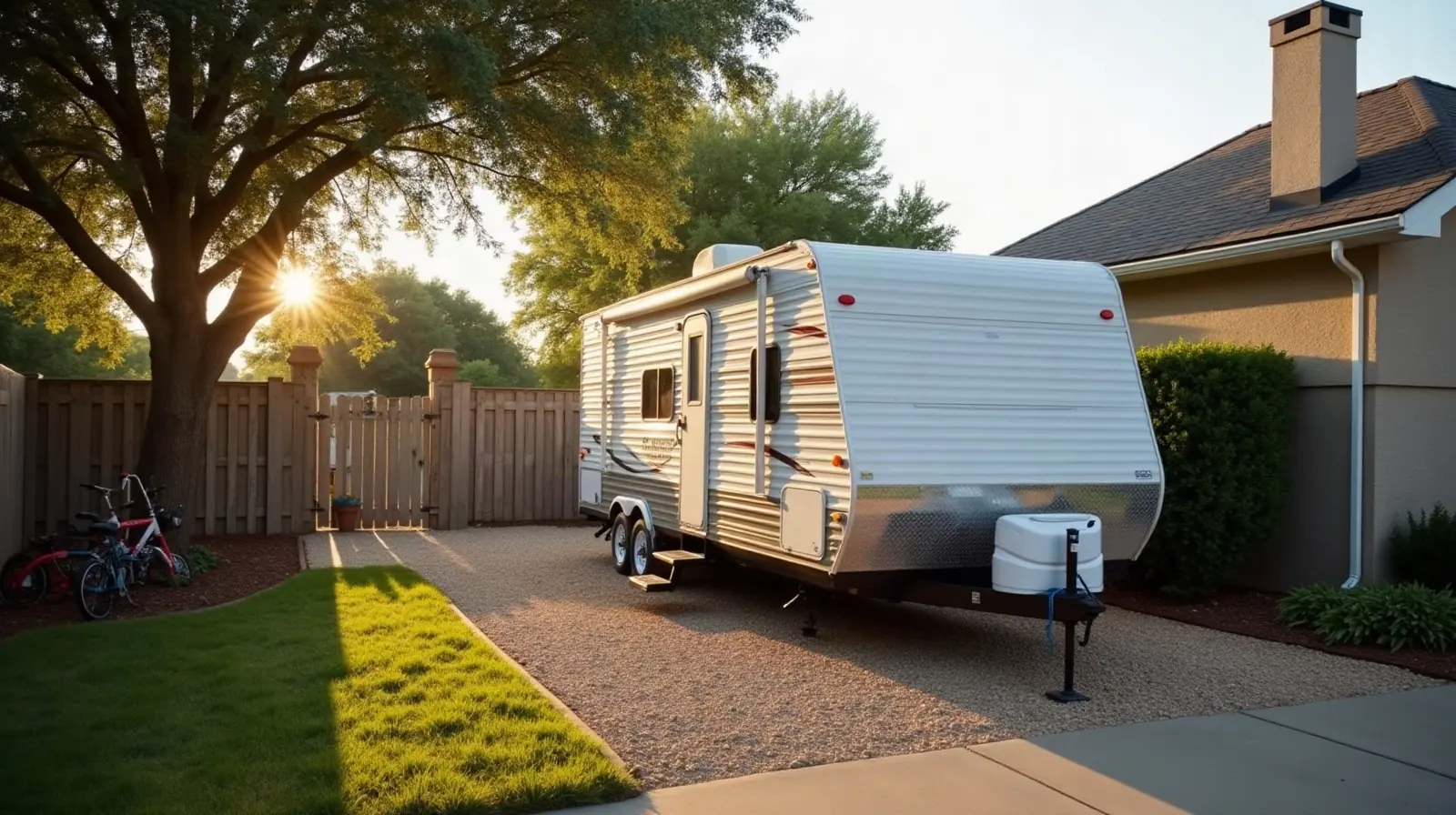
The letter came on a Saturday. I remember standing in the driveway with a tape measure and the sun beating on the concrete, and our 28-foot bunkhouse was sitting right where the HOA said it couldn’t, which got me looking at RV storage lots in Fort Worth. Eleven days is apparently too many. Something about a 72-hour limit. I was furious, but mostly I was already doing the math. Our lot in Fort Worth has the trailer, the minivan, and a garden cart full of kids’ stuff, and now I needed some RV storage ideas that didn’t cost more than the trailer payment. Outdoor storage around here runs $50 to $100 a month, and that’s before they hit you with admin fees and rate bumps. If you’re hunting for RV storage ideas becuase your HOA or the city sent you a notice, this is what I figured out, one spot at a time.
1. Your own driveway or side yard, if the rules allow it
Free is always my first thought. The HOA, not so much. Ours specifically says no RVs in the driveway past 72 hours, but the side yard behind the fence is fine because nobody can see it. Lots of cities have the same loading/unloading window, and some ban it altogether. So read your deed restrictions line by line before you drag a trailer across town. My friend in Arlington parks his toy hauler in the backyard, but he poured a gravel pad and built a tall wooden gate first, which ran him about $1,500, and he very carefully did not ask the HOA what they thought.
2. A backyard pad behind a gate
This was my first real plan. We measured and figured we could shove a 30-foot pad behind the exisiting fence if we moved the flower bed my daughter planted last spring. She cried. The problem is our lot slopes, so we’d need a retaining wall, and Fort Worth wants a permit for any paved surface over 200 square feet. The concrete quote was $6 to $12 per square foot, so a pad big enough was $4,000. Gravel was $1 to $3 per square foot, but the retaining wall ate up the savings. If your yard is flat and the HOA won’t fuss, this is a solid option. Ours would’ve been a project. So I started looking up, which is where the carport idea came in.
3. A metal carport at home
We got a quote for a steel carport with 12-foot legs, enough clearance for the trailer, and it came to about $6,500 installed for a 12x36 roof. HOA said no because you could see it from the street. I wanted to argue, but honestly the curb appeal argument was not on my side. Still, if your lot works, a carport gives you UV and hail protection for less than indoor rent. I wrote about pricing an RV carport with storage after calling around Denton and Fort Worth. Quotes were $4,000 to $12,000 depending on gauge and wind rating. Do the math and it’s about $100 a month over five years, which beats most covered lots. You still need permits and a friendly HOA, tho. And if a carport felt like a big number, the next option made it look like pocket change.
4. A pole barn or enclosed RV garage on your land
I called around out of curiosity and then had to sit down. A fully enclosed pole barn with a 14-foot roll-up door woudl run $25,000 to $45,000, and that’s not counting the concrete pad. That’s more than we paid for the truck. If your out on acreage, fine, it makes sense. On a suburban lot like ours, it’s overkill and the county assessor will be delighted to raise your taxes. A farmer I talked to in Weatherford put up a 40x60 pole barn for $38,000 and parks two fifth wheels inside, and he still fights mice. No amount of money solves mice. Which got me thinking about the cheapest roof of all: somebody else’s land.
5. A relative’s land or a farmer’s back pasture
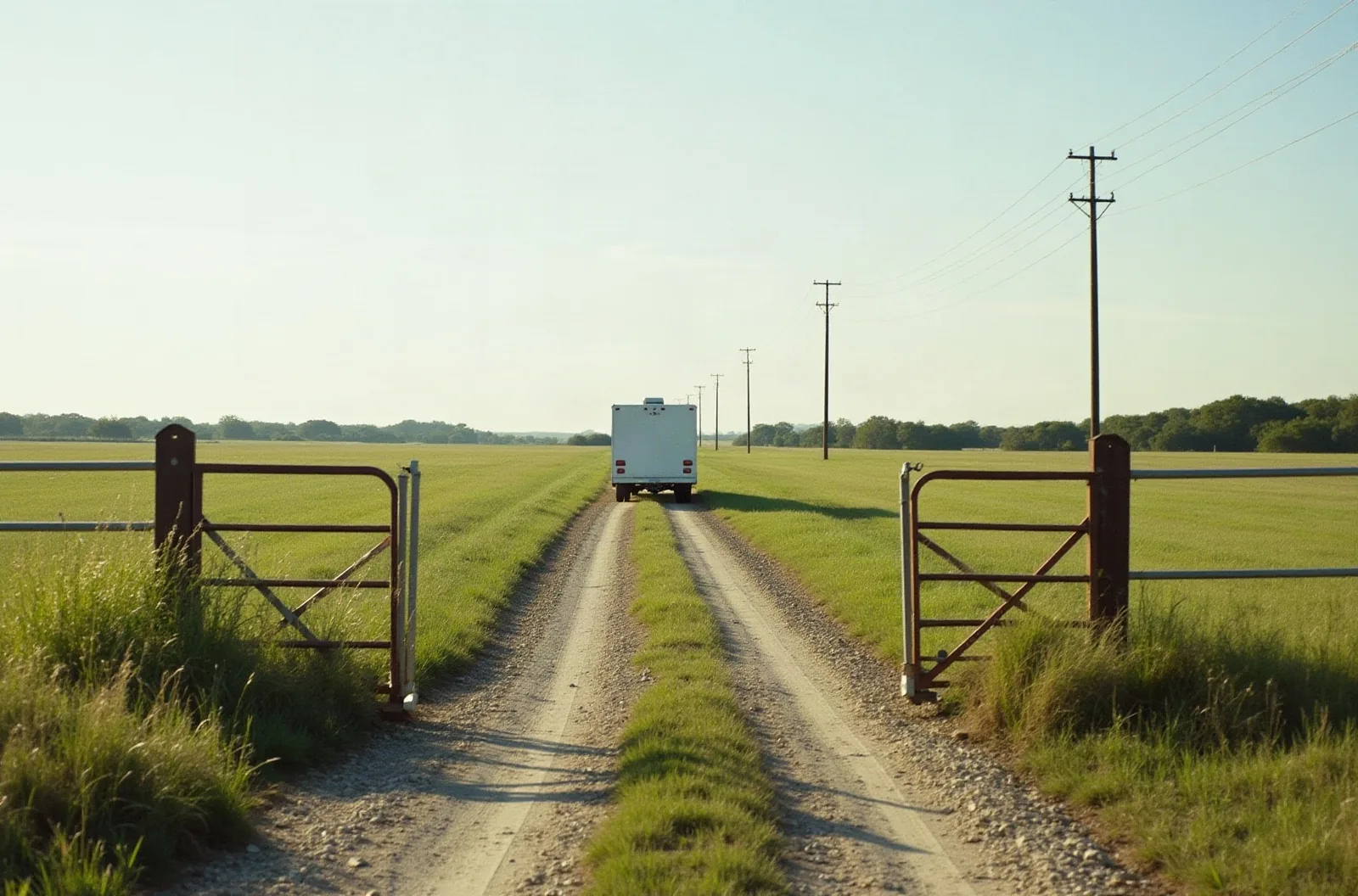
After the letter, I called my brother-in-law in Joshua and he said sure, bring it out. I remember backing the trailer through his gate while the kids chased grasshoppers. The pasture was soft, so we set the tires on two strips of 2x12 lumber. It was free for two months, which is hard to beat. But fire ants found the tongue jack, a cow used the corner as a scratching post, and there was no power for a battery tender so I had to pull the battery and charge it at home. A friend keeps his Class C on a horse farm for $50 a month with a handshake deal, which is great until the farmer decides to sell. Private land is cheap, but it’s all handshakes and mosquitos. So I went looking for a handshake with a contract attached.
6. Peer-to-peer RV storage marketplaces
Neighbor and similar sites list driveways, barns, and lots owned by private people. I found a fenced side yard about twelve minutes from home for $65 a month. Paved, security cameras, the works. That’s less than half what a commercial lot quoted me. The tradeoff is that you’re on a stranger’s property and relying on there insurance and their good mood. Read the platform’s host protection policy, and still keep comprehensive on your own RV. I helped a friend list his extra lot, and he now gets $90 a month from a motorhome. For renters, this is the cheapest paved option outside of family. If you need gate codes and a dump station, though, you’ll pay commercial rates.
If you’re weighing private land against a commercial lot, I found this RVtravel video that walks through the tradeoffs.
7. A campground or RV park with seasonal storage
Some parks have a storage area behind the campsites. I looked at one east of Fort Worth that wanted $85 a month for a grassy spot. Fair enough, but the grass turns to soup after heavy rain, and snowbirds start claiming spots in October. You’re already there when you want to camp, which is nice, and a few parks let you use the dump station when you move in and out. I checked three parks total. One required me to be a registered guest for the whole season, which defeated the point, this might work if you camp at the same park all the time. I don’t. That sent me toward the places built for storage and nothing else.
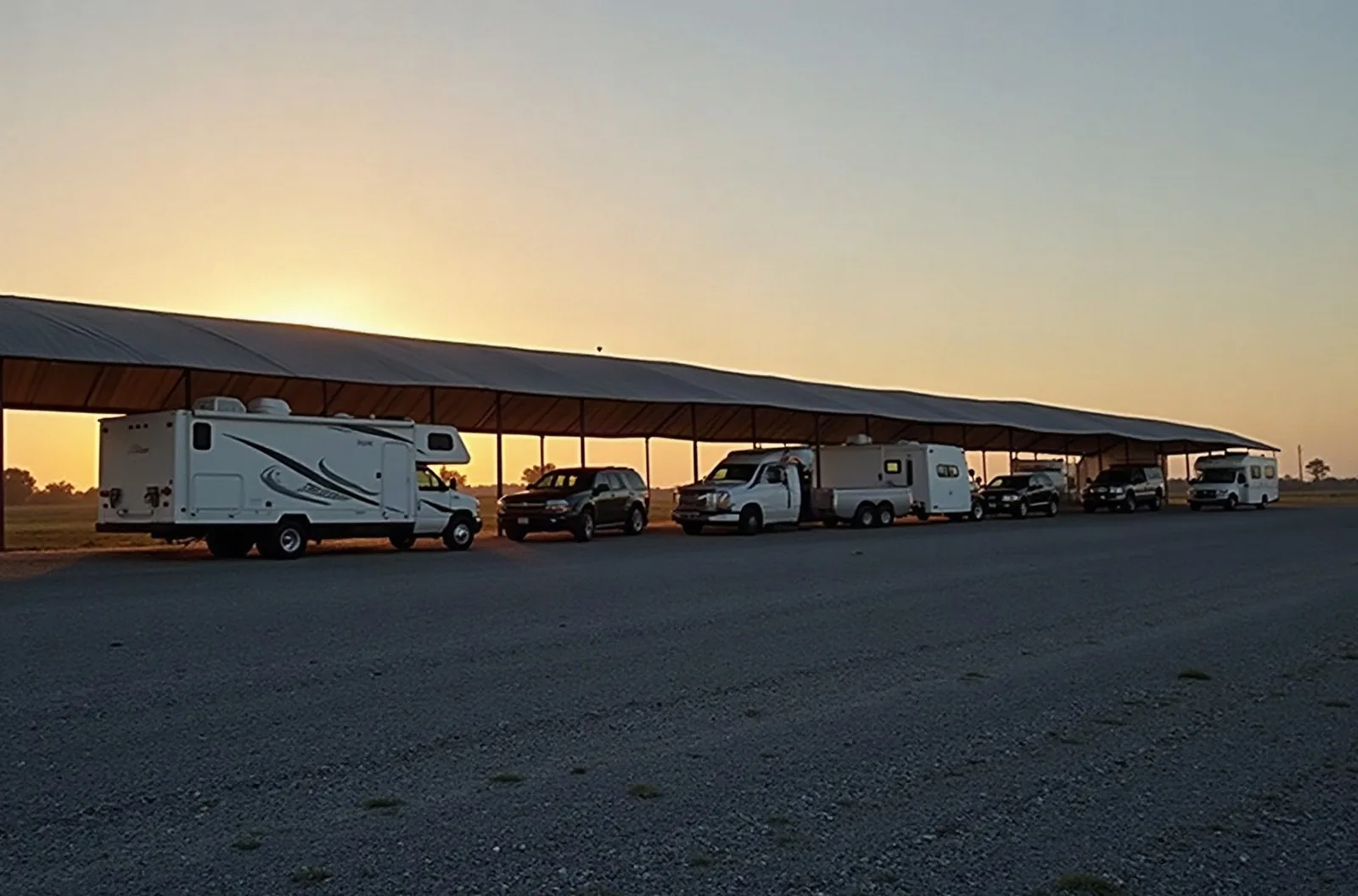
8. A dedicated RV storage lot, open or covered
This is what most people picture. Open lots in our area run $50 to $100 a month. A covered canopy is $100 to $200. Enclosed units are $150 to $450. The thing I learned the hard way: ask about the gate code. Most lots give you your own code, but one facility off Loop 820 had one single gate code and on Saturday mornings the line took twenty minutes. Covered is worth the extra here because hail destroys roofs. Ask about rate increases too. Plenty of places bump you $20 after six months and hope you won’t move. For broader numbers, I keep a page on RV storage across Texas with prices from all over. But before I signed anything, I wanted to see how the chain places compared.
9. A self-storage facility with an RV parking section
Shopping these was the most annoying part of the process. National chains have RV spaces, but the prices vary wild. I called one chain in Fort Worth that quoted $165 a month for a 10x30 uncovered spot. A local gravel lot three miles away wanted $65. The chain had better cameras and longer gate hours, sure, but the local lot had a dump station and didn’t charge an admin fee. I put together a separate post on cutting my RV storage bill if you want the full breakdown. The important part with self-storage: read the lien clause. They can sell your rig if you miss payments, but the timelines and notice rules vary by state.
What I’d do differently, knowing what I know now about RV storage ideas
Going back to that Saturday, I’d call my brother-in-law and check private listings before crying about the HOA. The free pasture cost me a can of wasp spray and a new set of wheel chocks, but it bought two months to compare real numbers. A covered spot at $150 a month is the safe move. A backyard gravel pad at $2,500 one time is the the long move. We’re still deciding.
This weekend, call two local dedicated RV lots and ask the monthly rate on a 30-foot space. Then check Neighbor for private listings within ten miles. You’ll be suprised how wide the spread is, and it’ll tell you if $100 a month is fair where you live. None of this is free except family, and even family expects a plate of ribs.
Related reading
FAQ
Where can I store my RV for free legally?
Your own property if the HOA and city allow it, or a relative's or friend's land with permission. Free storage has costs in time, fuel and exposure: the rig sits in weather and may need extra pest control and tire protection. A pasture is free, but I dealt with fire ants and cow scratches.
What is the cheapest way to store an RV?
The cheapest reliable option is offen a peer-to-peer driveway or lot for $50 to $100 a month. A commercial open lot in a rural area can match that. Covered storage is more expensive, but in hail country the extra $50 a month can save a costly roof repair. Comparing local rates is essential.
Do RV storage facilities require insurance?
Most do. They want proof of comprehensive coverage, which handles theft, fire, wind and hail while the RV is parked. Some facilities sell a tenant protection plan, but those are capped and aren't real insurance. Call your insurer and ask for a storage or lay-up option that keeps comprehensive.
Can I park my RV on the street in front of my house?
Most cities and HOAs limit street parking for RVs to 24 to 72 hours, and some ban it overnight. Check your city code and HOA rules before doing it. In Fort Worth, the police may chalk your tires and ticket you after 72 hours, but enforcement varies. A neighbor got two tickets before he moved his trailer.
How much is covered RV storage per month?
Typical US prices run $75 to $300 a month for a covered canopy, with $100 to $200 being common. In coastal cities like San Diego, expect $150 to $300 or more. A high roof (14 feet or more) is important for a Class A or fifth wheel with air conditioners, but check the posted clearance. Always check posted clearance.
Should I put a cover on my RV in outdoor storage?
A breathable UV-resistant cover helps, but only if it fits snug. A loose tarp traps moisture and chafes paint. I use a fitted cover for the winter months and remove it in summer; it cost $340, which is within the typical $150 to $700 range. Under a covered canopy, skip the full cover and just use tire covers.
How do I winterize an RV before storage?
Dump and flush all tanks, drain the water heater, bypass it, and pump RV antifreeze (two to three gallons) through the lines. Pour antifreeze in each P-trap and the toilet. Blow out lines with air at 30 to 40 psi first if you like. Close propane valves and use a battery tender.
Find storage near you
Compare covered, indoor and open RV storage in your city, then ask a few places for their current monthly rate.
Browse by state