Outdoor RV storage vs covered vs indoor: what the sun did to my roof
By Dale Pruitt · October 14, 2026 · updated October 18, 2026
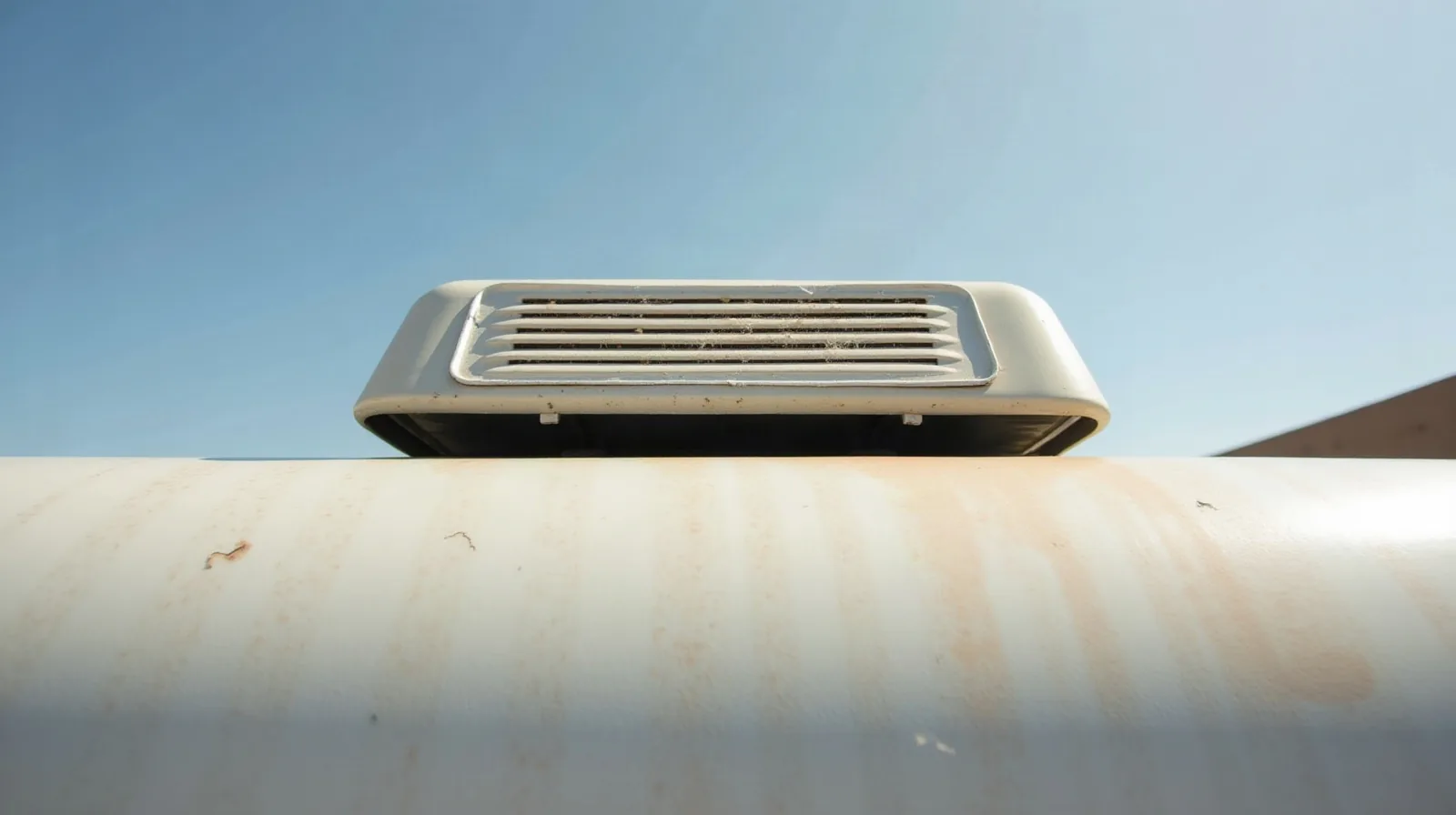
In June 2017 the sun cracked my roof sealant. I had the 36-foot diesel pusher on an open lot in Mesa for the summer, $75 a month. By October the UV had done its work. Hairline cracks along every roof seam. Tires looked ten years older than they were. That was my first lesson in outdoor RV storage spaces in Tucson and what the desert does to a rig. I moved under a canopy the next season and the math surprised me.
Outdoor storage is the cheapest way to park an RV, but it isn’t always the cheapest over time. I call it the sun tax. What you think you’re saving in rent, you pay later in sealant, tires and fading. Here’s what the three main options really cost and what each one protects against.
Outdoor RV Storage: What You Get for $50 to $150 a Month
An outdoor space is a gravel or concrete pad. You park, plug nothing in, walk away. Typical price in most markets: $50 to $100 a month. In Tucson, outdoor spaces run $30 to $150 or more depending on length and location. Big coastal cities can double that.
An open lot protects against theft, mostly, because of the gate and cameras. It don’t protect against UV, hail, wind-blown sand, or the slow bake of a metal box in 110-degree heat. My roof sealant lasted two summers before it started cracking. My tires sun-checked in three years.
Who should pick outdoor: anyone using the rig evry month, where the sun never has time to sit on one spot. Or someone with an older coach that already has fading and cracked sealant. Or a snowbird who’s only gone for four months and can throw a cover on it. But if you’re storing for six months or more in the Southwest, outdoor storage is a gamble you might loose.
Covered RV Storage: A Roof Over Your Head for $100 to $200 a Month
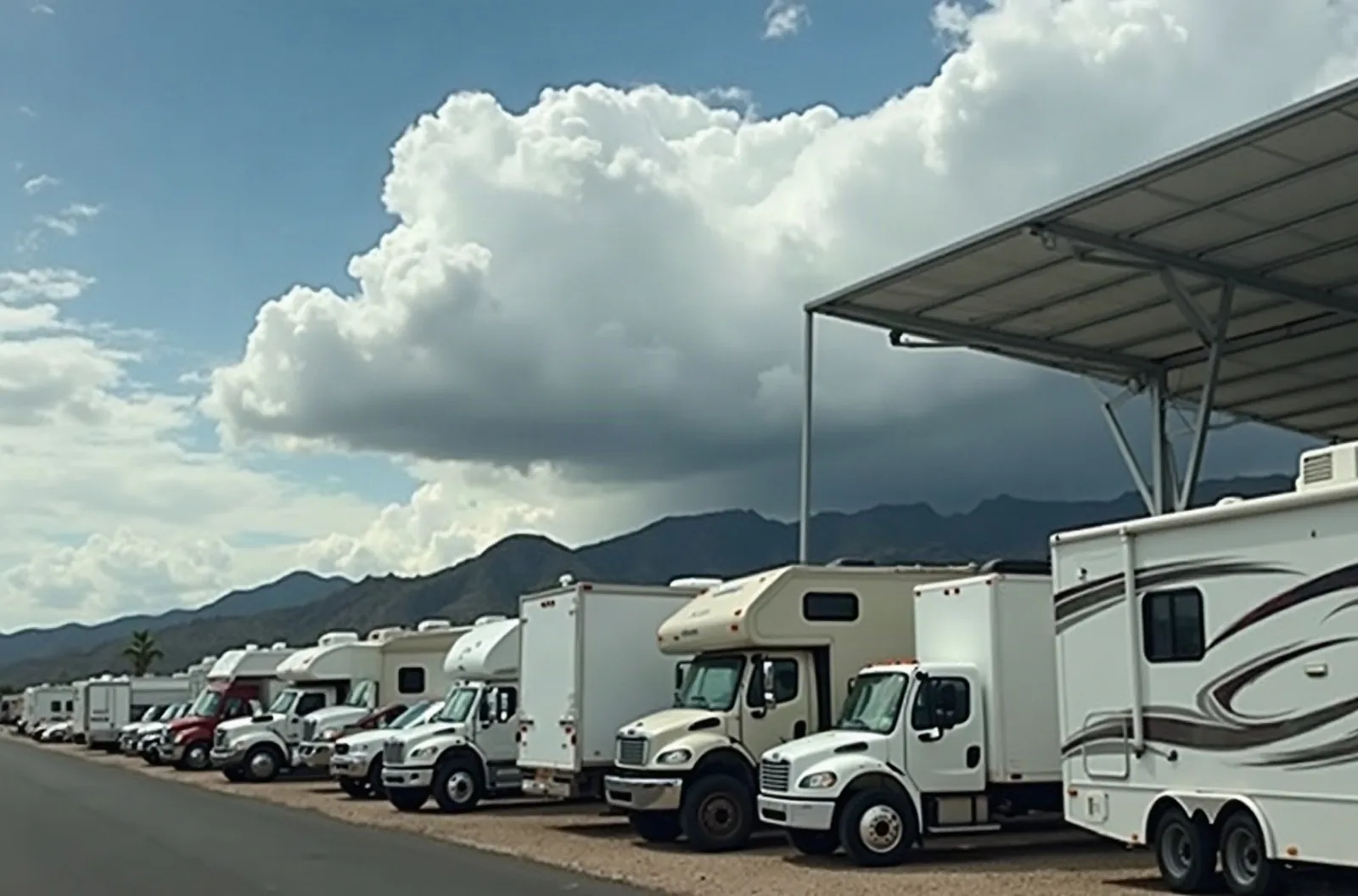
A covered space is an open-sided steel canopy. Sun off your roof, but the sides are open to wind, dust and sideways rain. In Tucson, covered RV storage in Tucson runs $100 to $200 a month for a 40-foot space. That’s $25 to $100 more than outdoor, wich adds up to $300 to $1,200 a year.
What changed for me: after moving under a canopy, my roof sealant stayed intact for four years. Tires stopped cracking. The dash didn’t fade as fast. But the dust still got in. A monsoon wind can blow sand and rain sideways under a canopy, and the rear cap of my coach still faded a little from reflected sunlight.
Covered storage is the sweet spot for most owners in the Sun Belt. You pay for shade but not for four walls. If you can find a canopy with 14-foot clearance or more, a 36-foot Class A fits with room for the AC shrouds. Waitlists are common before snowbird season, so call ahead.
Indoor RV Storage: $150 to $450 a Month for Total Blockout
Indoor storage means a fully enclosed unit or a shared warehouse. Roll-up door, maybe 14 feet tall, and your coach sits in the dark. Prices run $150 to $450 a month, with long units for 40-foot coaches on the higher end. Heated indoor storage can hit $700 a month or more. That’s real money.
What indoor gets you: no UV, no hail, no wind, no dust, and much better theft protection. A friend keeps his fifth wheel in an enclosed unit in Phoenix for $275 a month. His roof looks new after six years. His tires still age out at five years, but they don’t sun-check.
Who should pay for it: anyone with a high-dollar coach, a full-body paint job they want to preserve, or a classic rig. If your RV is worth $150,000 or more, the extra $1,500 to $2,400 a year for indoor storage is cheap insurance against fading and sealant failure. But for a 2014 diesel pusher like mine that’s already seen some sun, indoor storage doesn’t pencil out.
Outdoor vs Covered vs Indoor: A Side-by-Side Price and Protection Table
Here’s the quick comparison, based on rates I’ve seen and paid in the Southwest:
| Storage Type | Typical Monthly Cost | Protects Against | Doesn’t Protect Against | Best For |
|---|---|---|---|---|
| Outdoor (open lot) | $30–$150 | Theft (if gated), some vandalism | UV, heat, hail, dust, wind-blown sand | Short gaps, monthly use, older rigs, tight budget |
| Covered (canopy) | $75–$300 | Direct sun, hail, snow load | Sideways rain, dust, some UV reflection | Sun Belt storage over 3–4 months, most owners |
| Indoor (enclosed) | $150–$450+ | UV, heat, hail, dust, theft | Moisture if unvented, high cost | High-value coaches, classic rigs, full-timers’ home base |
Note that these are ranges; local rates vary. In Tucson, covered spaces are scarce because everyone wants shade. In Minnesota, indoor storage is more about snow and cold than sun.
My rule of thumb: if you’re storing in the desert for more than four months, a covered space pays for itself in roof maintenance you dont have to do. If you’re storing for less than that, or you move the rig often, outdoor is fine with a good cover.
I found this video that breaks down the storage options well.
When Outdoor Storage Is Fine (and When It Costs You Money)
Outdoor storage is fine if you’re in a mild climate, like coastal Oregon or the Upper Midwest, where the sun isn’t trying to kill your roof. It’s also fine if you use the rig every six weaks or less. UV damage happens over months of continuous exposure, not a few weekends.
But in the Southwest, outdoor storage costs you money in three ways. First, roof sealant: I paid $1,200 to have my roof resealed after two summers on an open lot. Second, tires: sun-checked tires on a motorhome are a liability, and replacing six 22.5-inch tires cost me over $3,000. Third, fading: the sun bleaches decals and dulls the fiberglass, which hurts resale value. My coach lost maybe $5,000 in value from two summers of sun.
The math: outdoor storage saved me $600 a year in rent compared to covered. But it cost me $4,200 in maintenance and resale value over two years. Net loss of $3,000. Covered storage woudl have broken even or better.
How to Choose: A 5-Minute Check for Your Own Rig
Measure your rig first. Length bumper to hitch, including bike racks and ladders. My 36-foot coach actually measures 38 feet 4 inches with the spare tire carrier. Brochure length is a lie. Then measure height to the top of the AC shroud: mine is 12 feet 9 inches, which rules out any canopy under 13 feet of clearance.
Check your climate. Hail country? Covered or indoor is worth the extra. Rain that comes in sideways all winter? A canopy won’t keep your decals dry. Phoenix or Tucson? The sun is your enemy.
Check your budget against the cost of maintenance. A $100 monthly difference is $1,200 a year. Roof reseals cost $800 to $1,500. Tire replacement costs $2,000 to $4,000. Storing more than six months, covered storage almost always wins in the Sun Belt.
Check the facility’s clearance and gate hours befor you sign. I once drove 45 minutes to a covered lot that advertised 14-foot clearance, then found a beam at 13 feet 2 inches. My AC shrouds cleared it by 3 inches. Never trust the brochure; bring a tape measure.
What I’d Do Differently (and What I’d Still Do)
If I could go back to 2016, I’d have gone straight to a covered space. The extra $50 a month would of saved me a $1,200 reseal and a set of sun-cracked tires. I’d also have bought a breathable cover for the winter months, as I wrote about in my RV storage cover buying guide. A good cover under a canopy keeps the dust off.
But I’d skip indoor storage. My coach is a 2014, not a museum piece. The extra $150 to $300 a month doesn’t make sense for a rig that’s already got some sun fading.
One more thing: check your insurance before you park it. Most policies cover theft and hail, but not gradual UV damage. You need comprehensive coverage while stored, and many insurers offer a storage option that suspends collision and saves a few hundred a year. I wrote a whole post on RV storage insurance that’s worth a read before you sign a lease.
The Sun Tax Is Real: Check Your Own Numbers This Weekend
Go look at your roof. Hairline cracks in the sealant? The sun has already started its work. If you’re paying $50 a month for outdoor storage but you know you’ll need a reseal next year, you’re not saving money. You’re deferring it.
I’d rather pay a little more each month and not watch my coach age five years every summer. Covered storage is my choice for any storage term over four months in the desert. For shorter gaps, outdoor with a good cover works.
This weekend, call three lots in your area: one outdoor, one covered, one indoor. Get real prices for your actual length. Then do the math on roof reseals and tire replacement. I bet the answer surprises you.
If you’re still deciding
FAQ
Is outdoor RV storage bad for my roof?
Continuous sun exposure will crack roof sealant over time, especially in hot climates. In the Southwest, two summers on an open lot can cause hairline cracks that let water in. Outdoor storage is fine for short gaps or mild climates, but not for long-term desert storage without a cover.
How much does covered RV storage cost per month?
Covered RV storage typically runs $75 to $300 a month, with $100 to $200 common for a 40-foot space. In Tucson, expect $100 to $200 for a canopy with 14-foot clearance. Waitlists are common before snowbird season, so book early.
What's the difference between covered and indoor RV storage?
Covered storage is an open-sided canopy that blocks the sun and hail but allows dust and sideways rain. Indoor storage is a fully enclosed unit that blocks everything, including dust and theft, but costs $150 to $450 a month or more. Indoor is best for high-value coaches.
Does RV insurance cover sun damage in storage?
Many RV policies exclude gradual sun damage like fading or cracked sealant, because it's considered wear and tear. Comprehensive coverage protects against sudden events like hail, theft or fire. Check your policy's exclusions before relying on insurance for storage damage.
How do I know if my RV will fit in a storage space?
Measure length bumper to hitch, including racks and ladders, and height to the top of the AC shroud. Most canopies advertise 12 to 16 feet of clearance. Bring a tape measure to the facility; don't trust brochure numbers. My 36-foot coach actualy measures 38 feet 4 inches.
Should I cover my RV if it's in covered storage?
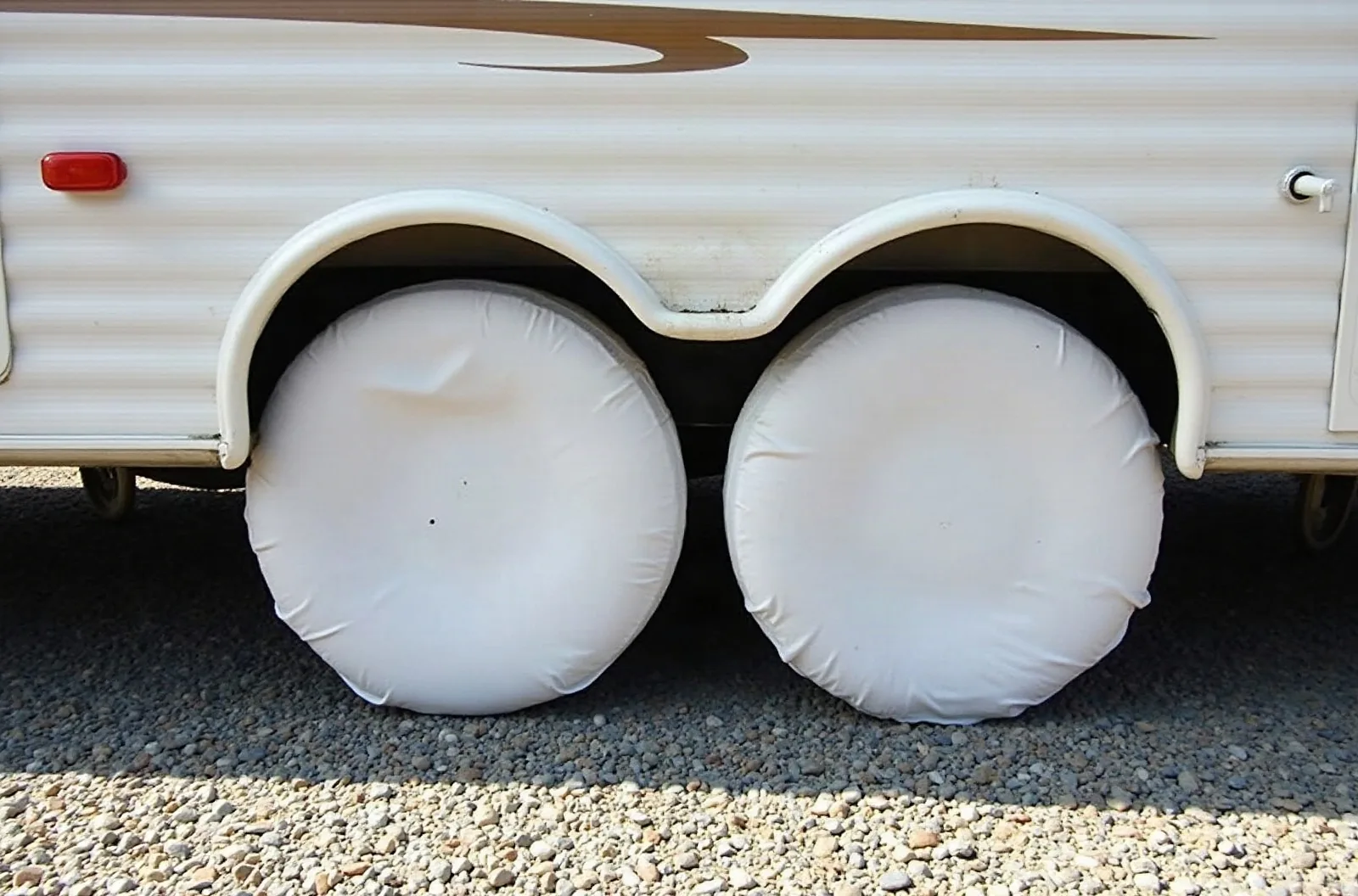
A full cover is usually unnecessary under a canopy, but tire covers still help block UV. If dust is a problem, a breathable cover can keep the exterior clean. In a fully enclosed unit, no cover is needed. In outdoor storage, a good cover is a must in sunny climates.
Find storage near you
Compare covered, indoor and open RV storage in your city, then ask a few places for their current monthly rate.
Browse by state