What to look for in an RV storage facility: my 12-point walk-through
By Rhonda Keel · October 7, 2026
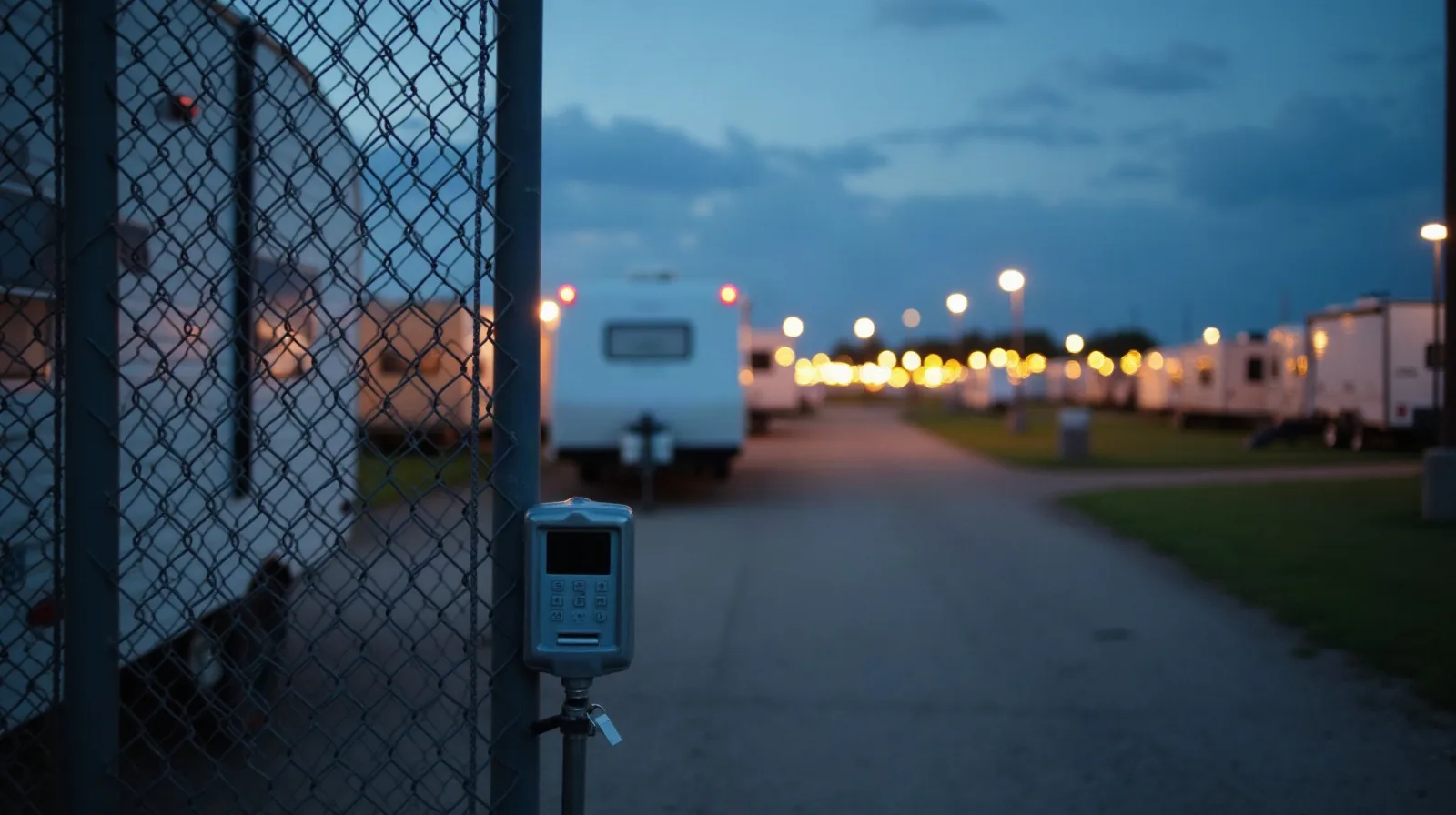
Last March I spent a Saturday driving between three RV storage facility locations with a clipboard, a measuring tape, and my seven-year-old in the back seat asking if we were lost. I was comparing RV storage facilities in Dallas because I needed a better option. One lot wanted $95 a month for a 30-foot pull-through, and two weeks later that same space was underwater after a spring storm. Now I call that check the puddle test. Touring a lot isn’t about the pretty brochure. It’s the gate, the ditches, and whether your slide-out clears the post.
1. Start with the gate and your own code
A broken gate arm at 2 p.m. On a Saturday tells you plenty. So does a manager who wont put a unique code in the keypad for you. If they won’t, I assume the cameras are for decoration.
One Fort Worth lot gave out the same four-digit code to every tenant and changed it only when somebody moved out. I watched three rigs come and go in the hour I was there, and nobody stopped at an office. That’s not security; that’s a parking lot with a padlock.
2. Gate hours that fit a Friday night
I need to hitch up Friday after work. Sometimes late. If the gate won’t let me in until Saturday at 9 a.m., I lose a day of camping.
Ask for the exact gate hours and wether there’s an after-hours fee. Many lots run 6 a.m. To 10 p.m. Some offer 24-hour access for an extra $15 to $30 a month. I’ll pay that when it means I can pull my travel trailer out at 5 a.m. For a long drive to Big Bend.
3. Cameras, lighting, and the one corner nobody talks about
I found a lot in North Richland Hills with great coverage at the entrance and nothing down the back row where the 40-foot fifth wheels parked. That back corner matters. So does lighting.
If I can’t see my hands on the lock, I don’t care how many megapixels the camera has. A well-lit lot with cameras on every corner costs maybe $20 more a month, and it’s money I don’t fight about.
4. Who is actually on site?
When my water heater failed before a trip, I called the manager at a Grapevine lot and he walked out to my space and told me which low-point drain was still open. That’s the difference between a manager and a phone number.
If there’s no on-site manager, check the after-hours phone number. Does a local person answer or a national call center? The call center can’t see your rig and they can’t open the gate for you.
5. The puddle test: surface and drainage
That lot I mentioned near Dallas, the one that flooded, the owner had graded the drive slopes toward the rear. Every fifth wheel sat in a puddle.
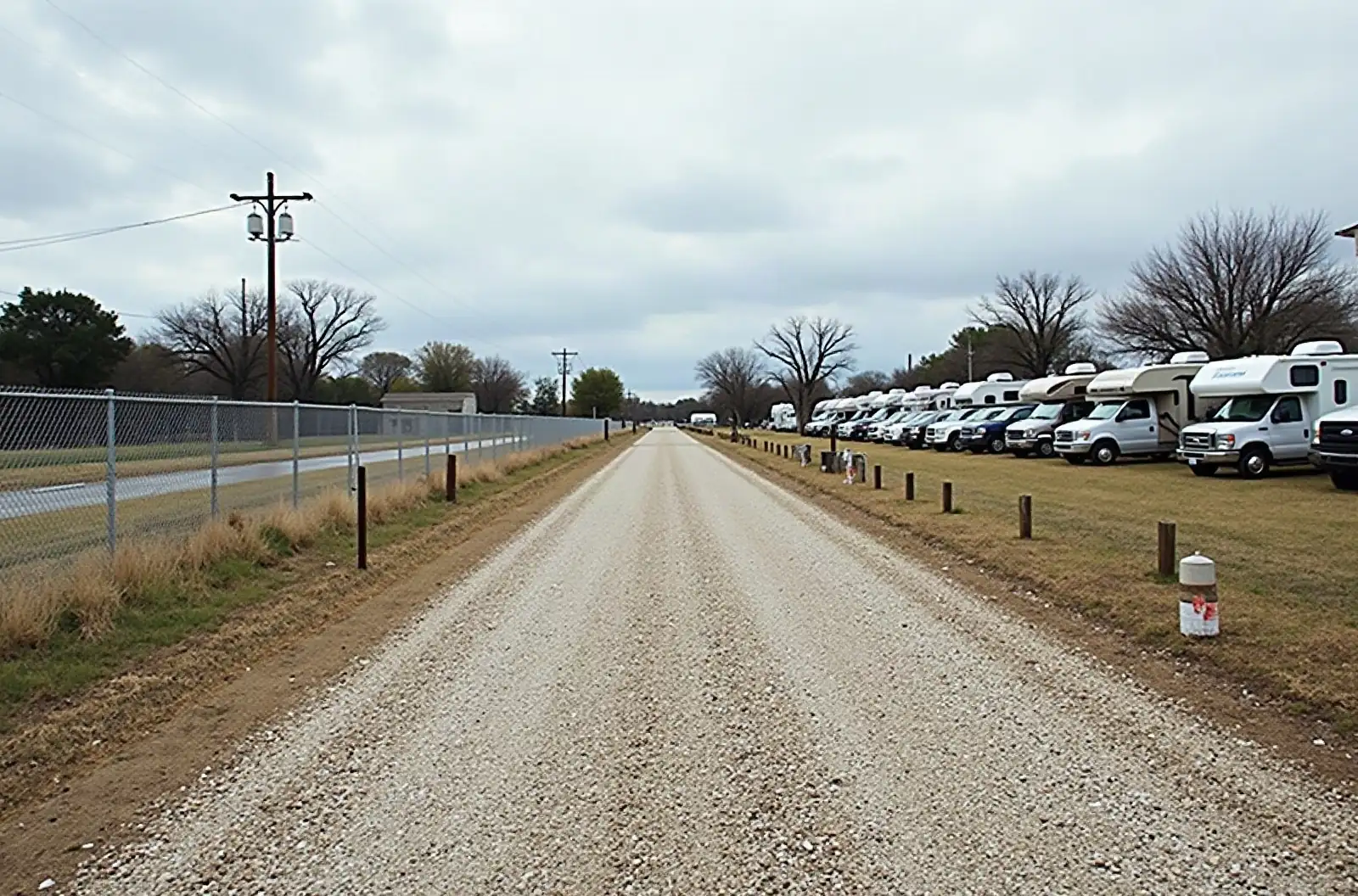
Concrete and asphalt usually drain, if the lot is graded right. Gravel is fine if there’s a crown and a ditch at the edge. Ask the manager what the lot looked like after the last big rain. If they say “fine,” walk it yourself after the next storm.
6. Turning room for a 28-foot box at an RV storage facility
I drive a 28-foot bunkhouse, and some lots just don’t give me room to swing it. The test is simple: drive your rig through the gate and down the aisle. If you need a three-point turn just to line up with a back-in space, keep looking. Pull-through spaces are easiest, but they usually cost $20 to $50 more a month. For a long rig, that may be the cheapest insurance you never buy. Measure your rig before you rent, because the brochure length is not the bumper-to-hitch length.
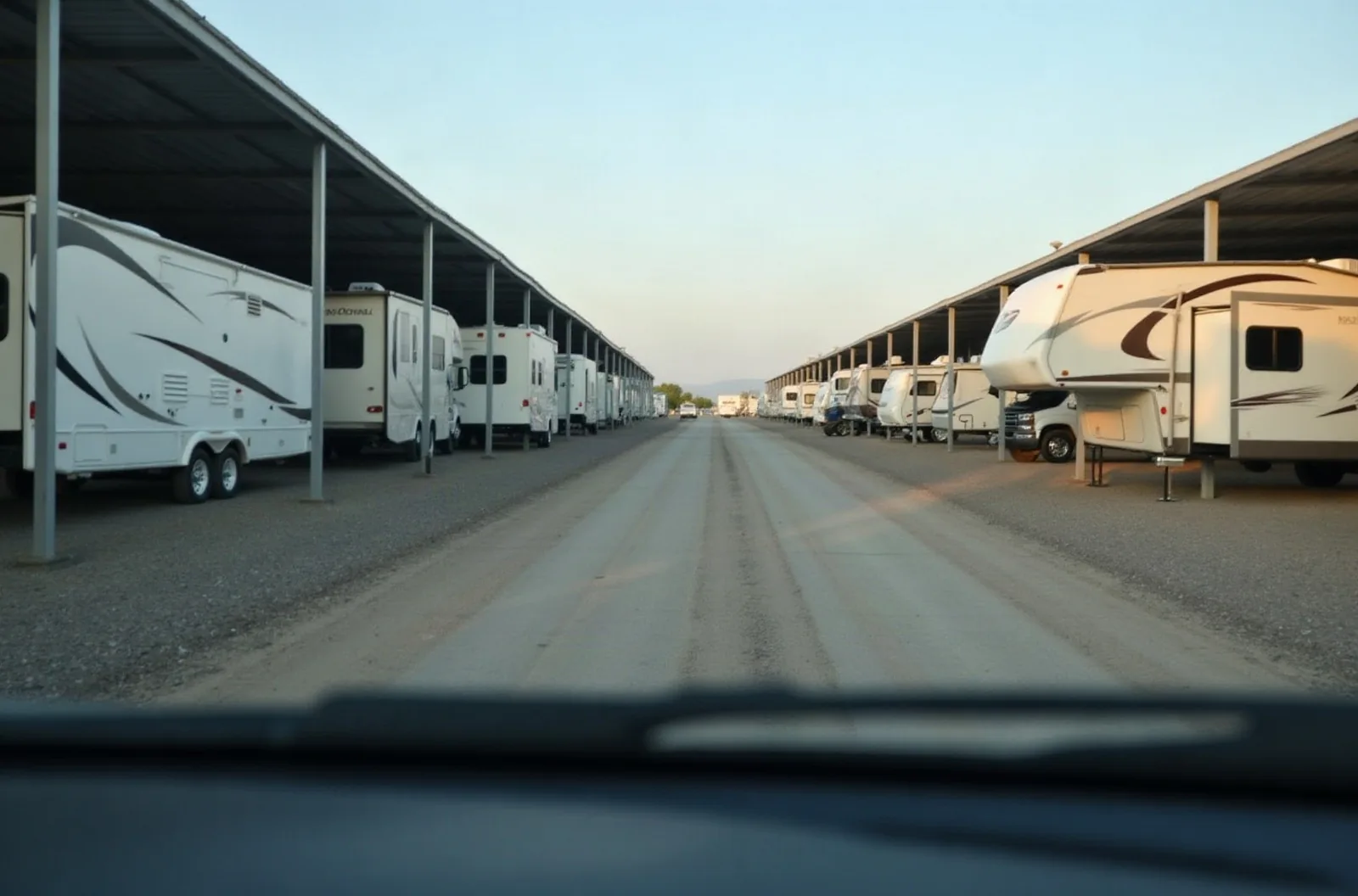
I watched this video after touring a few lots and it helped me understand what good drainage and turning space actually look like.
7. Pull-through versus back-in: the price of dignity
I can back a trailer, but I’d rather not do it with three retired guys watching from lawn chairs.
At one lot south of Fort Worth, a 40-foot pull-through was $150 a month, and the same length back-in was $110. I’d pay the extra $40, but my budget won’t. Know which you prefer before you sign, and measure the aisle width for the back-in.
8. Canopy clearance: the AC will not duck
One canopy I checked had a 13-foot-4-inch clearance, and my AC unit sits at 13 feet. That’s only 4 inches of margin, and one puddle of standing water in a rut could tilt my rig enogh to scrape. I passed.
Most canopies run 12 to 16 feet, but some older lots are lower. If you have a fifth wheel or Class A, you need 13 feet or more. And check the roof of the canopy for nails, loose panels, or signs of hail damage.
9. Amenities: dump, air, and a working outlet
I used the dump station once before a summer trip and checked my tire pressure in five minutes becuase the air hose was right there.
Ask if the dump station is included or costs a few dollars per use. Outlets at the space are a luxury, mostly at covered or enclosed spots. I keep a battery maintainer plugged in when I can, which beats hauling a disconnected battery home every trip.
10. Read the rules like your HOA wrote them
My HOA is why my trailer sits in a storage lot instead of my driveway. So I read facility rules the same way I read the deed restrictions.
I keep a copy of the rules in my glovebox and mark the ones that affect me. Typical rules: no living in the rig, no major repairs, propane tanks closed, no fuel cans stored. A rule against washing your RV might mean the outdoor spigot is for employees only. Some places warn twice then fine you $50. Others sticker you first.
11. The contract: month-to-month and the rent increase clause
I want month-to-month. I have walked away from lots that wanted a six-month lock.
Look for these specific things: notice period for a rate change, how to cancel (usualy 10 to 30 days’ written notice), whether there’s a late fee and when the lien process starts. Ask the manager what thier typical increase has been over the past two years. If he or she won’t answer, that’s an answer.
Also check the insurance requirement. Most facilities want proof of comprehensive coverage, and some charge a tenant protection fee if you don’t have your own. Read our deep dive on RV storage insurance before you sign anything.
12. The neighbor test: look at what’s parked next to you
I once parked next to a rig with a blue tarp flapping and a gas can under the tongue. That’s not a crime, but I don’t want my bunkhouse parked two feet from a propane tank that hasn’t been inspected since the Clinton administration.
Better clues: clean roofs, tire covers, wheel chocks, slide-outs in, no trash underneath. A row of well-kept rigs tells me the tenants care and the manager enforces basic upkeep. One lot I liked had a 45-foot Newmar parked next to a spotless teardrop, and both had matching tire covers. I signed there.
The one mistake I will never make again
I used to pick the cheapest sheet-metal lot and hope for the best. That cost me a flooded wheel bearing and a $400 brake job after my tires sat in standing water for two months. Now I pay $12 more a month for a space on the uphill side of a concrete lot. It drains, and my brakes don’t.
One rule I live by now: before you sign, drive through the gate at the exact time and day you’ll actually use the rig. If the gate is closed, the aisle is too tight, or the puddle is already forming, the price does not matter. Your RV will be sitting there for six months, and you will be the one paying the repair bill.
Check current rates for covered RV storage in Houston if you’re in a humid market, and ask your facility what they charge for a 30-foot space this month. Prices move, and so does the quality. Go walk the lot this weekend.
If you’re still deciding
FAQ
What is the average cost of RV storage per month?
Typical US ranges: outdoor uncovered $30 to $150, covered canopy $75 to $300, indoor enclosed $150 to $450, heated $300 to $700. Prices climb with RV length and urban location. A 40-foot Class A pays more then a 20-foot teardrop at the same lot. Rural sites 15 to 30 minutes outside a metro are usually cheaper.
Do I need insurance on an RV in storage?
Most facilities require proof of comprehensive coverage, which covers theft, vandalism, fire, hail, and windstorm while parked. Collision is not needed. Ask your insurer about a storage or lay-up option that suspends collision and keeps comprehensive. The facility's policy does not cover your RV. Read the policy exclusions, especially for rodents and mold.
What size storage space does a 28-foot travel trailer need?
A 28-foot bumper-to-hitch trailer fits a 30-foot space, but a 10x30 is the bare minimum. If you have a bike rack or ladder, add length. A 12-foot wide space gives room to open the door and back in. Measure the length, not the brochure length, and compare to space sizes like 10x35 or 12x40.
Is covered RV storage worth the extra cost?
It depends on you're climate. Covered storage protects from sun, hail, and rain, which extends roof sealant and tire life. In Texas heat, a canopy cuts UV damage and interior heat. Covered spaces cost roughly $75 to $300 a month versus $30 to $150 for open lots. If you store for years, the roof saved may pay the diffrence.
How do I winterize an RV in storage?
Dump and flush tanks, drain fresh tank and water heater, bypass the heater, and pump 2 to 3 gallons of non-toxic RV antifreeze through lines. Pour antifreeze into P-traps and toilet. Disconnect or maintain the battery, close propane valves, add fuel stabilizer to motorhomes. Detailed steps are in the research sheet above.
Can I store an RV at home instead of using a storage facility?
If local code and HOA rules allow, yes. Many cities limit driveway or street parking to 24 to 72 hours for loading. A backyard concrete pad behind a gate or fence is ideal. HOAs may ban RV parking or require screening. Check your deed restrictions first, or you'll get a notice like I did.
What should I look for when touring an RV storage facility?
Check gate codes, access hours, cameras, lighting, drainage, turning room, space width, clearance, amenities, rules, and the contract. Walk the lot after rain. Look at neighbors' rigs. Ask about rate increase clauses and lien terms. My 12-point walk-through above covers each of these in detail.
Find storage near you
Compare covered, indoor and open RV storage in your city, then ask a few places for their current monthly rate.
Browse by state