Is climate controlled RV storage worth the money?
By Jenna Halvorsen · October 18, 2026
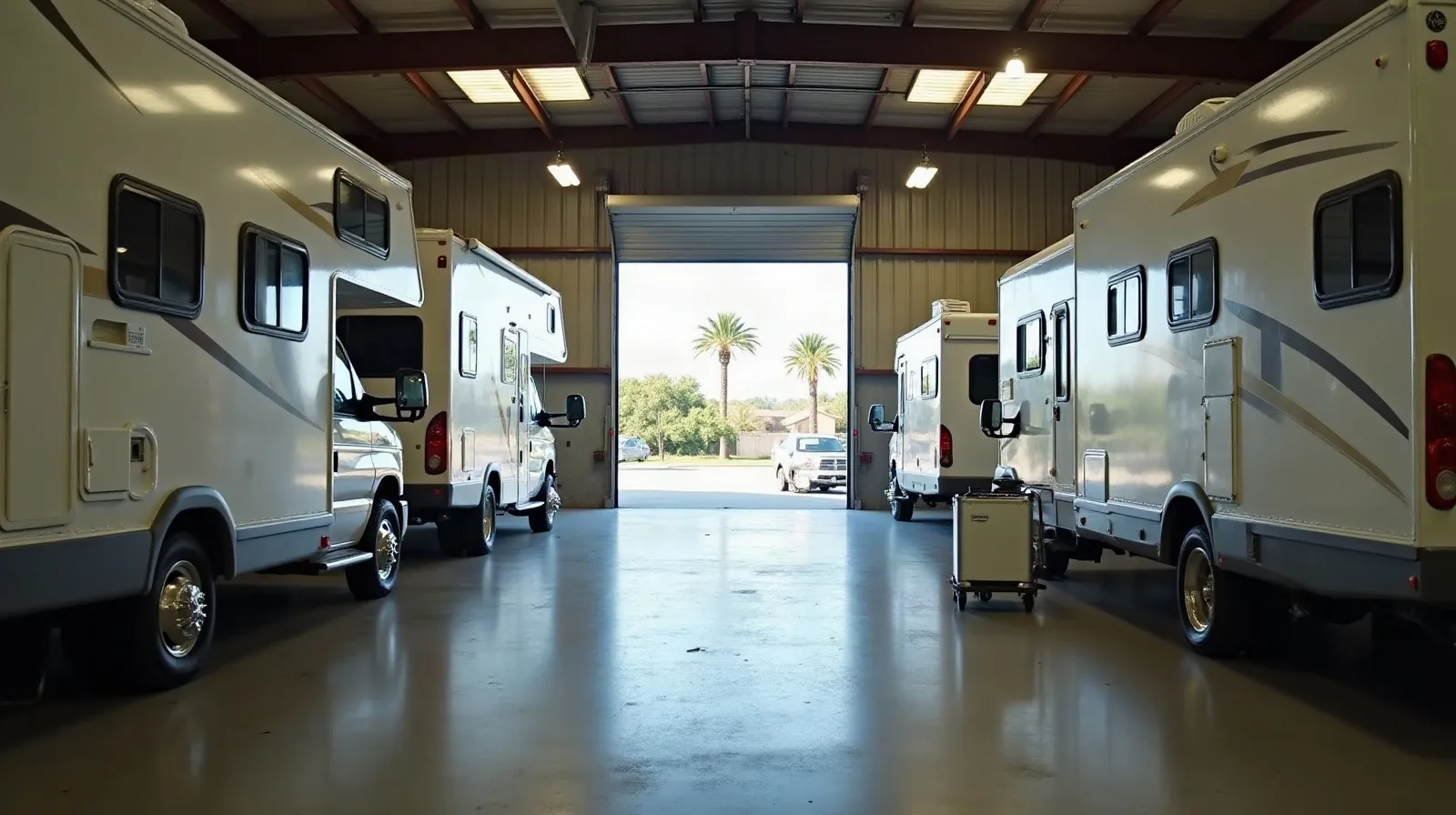
The first October I worked the front office at a boat and RV storage yard in Fort Myers, a customer rolled in from four months up north, unlocked his travel trailer, and that musty smell hit us from ten feet away before he even got the door all the way open. He’d been paying $82 a month for a basic gravel spot, but Southwest Florida humidity had worked its way into every cushion and cabinet seam. After that I started telling my snowbirds to at least look at indoor RV storage in Orlando before assuming an outdoor spot would cut it. In a coastal climate, the air itself does the damage.
What climate controlled RV storage actually is
A climate controlled unit keeps temperature and humidity inside a set range, and the humidity number matters more than the temperature one. Most facilities I’ve walked through hold somewhere between 55 and 80 degrees, with humidity kept under 50 percent.
Heated storage just keeps the space above freezing. Does nothing for humidity. Plain enclosed storage gives you four walls and a roof but no active air management.
When a facility tells me there units are climate controlled, I ask what range they hold and wether they log it. If the manager can’t answer both, it’s probaly a heated garage with nice signage.
What your money actually buys
The jump from enclosed to climate controlled is real money, and what it buys you is lower humidity, steadier temperature and usually a cleaner building. In most Sun Belt markets you’ll pay $150 to $450 a month for a basic enclosed unit. Climate controlled runs $300 to $700, sometimes more for a 40-foot Class A spot. Rural lots outside town can land cheaper, but not always.
The exact difference depends on your market. Lower humidity means less mold and mildew. Steadier temperature is easier on electronics, woodwork and adhesives. And the building is usually cleaner with better seals, because the operator already spent the money on HVAC.
At my old yard in Fort Myers, the indoor units without climate control still picked up that sour damp smell over a Florida summer. The few climate controlled units on the property never did.
Who should pay for climate controlled RV storage
If you keep your rig anywhere in the humid Gulf or Atlantic coastal South, climate controlled storage is worth a hard look. Mold doesn’t need weeks of neglect. It can start in days when overnight lows stay above 75 and humidity sits near 90 percent. I saw it in sleeping bags, curtains, even the backside of cabinet doors.
Owners of high-value motorhomes, especially Class A diesel pushers, often figure $400 to $600 a month is cheaper than dealing with water stains or delamination. Hard to argue. A single de-lamination repair on a laminated sidewall can run into the thousands.
People who use the RV as a winter escape but store it in the South all summer often go climate controlled because they can’t check on it every week. That was my snowbird crowd.
But if you’re a weekend warrior with a 2009 travel trailer you bought for $8,000, climate controlled storage might cost more per year than the trailer’s depreciation. At that point, you’re better off spending the money on a good cover and a few buckets of desiccant.
Who should skip it
If you store in a dry climate like inland Arizona, West Texas or parts of the Mountain West, climate controlled is usually overkill. Summer heat can hit 110 in Phoenix, but the humidity stays low. A shaded or enclosed spot handles that fine.
If you’re on a tight monthly budget, that $300 to $700 rate eats up your travel fund fast. I’d rather see you take two extra trips a year than spend that money air conditioning an empty trailer.
And if you’re only storing for a month or two between trips in moderate weather, the math rarely works. The real payoff comes with long, humid or freezing stretches of four months or more, which is exactly when guessing wrong gets expensive.
How to check a facility’s claim before you sign
Anyone can put a sticker on a door that says Climate Controlled, so don’t take it on faith. Ask the manager these questions:
- What temperature range do you hold, and what’s the humidity set point?
- Do you have a generator or backup plan if the power goes out?
- Can I see the HVAC logs or a thermostat readout for the past week?
- Is the unit individually metered or is climate included in the rent?
A facility that can’t answer the first two questions is not selling climate control. It’s selling a roof and a dehumidifier that may or may not run.
Power outages are no joke. After Hurricane Ian, some indoor facilities in Southwest Florida went weeks without electricity. The buildings got hot and wet fast. A climate controlled unit is only as good as the generator behind it.
If you’re still not sure, this quick video from Extra Space Storage explains the basics of climate controlled storage and why it matters.
The humidity math nobody explains
Humidity is the invisible threat, and the math is simple: mold grows when relative humidity stays above 60 percent, and Southwest Florida spends half the year above 80 percent. I used to walk the outdoor rows after a rain and see water beading on the undercarriages even when the rigs were covered.
At my storage yard, we saw three levels of protection play out every summer:
| Storage type | Typical monthly rate | Mold risk in humid Gulf climate |
|---|---|---|
| Outdoor / uncovered | $50 to $150 | Highest |
| Enclosed, no climate control | $150 to $450 | Medium |
| Climate controlled | $300 to $700 | Lowest |
The table is blunt, but it matches what I saw. The outdoor rigs always had the most issues by October. The enclosed rigs had less, but not zero. The climate controlled rigs came back clean.
You can narrow the gap with cheaper fixes though. I had customers run a small dehumidifier inside a non climate controlled enclosed unit where the facility allowed an outlet. They drained it weekly or ran a hose to the floor drain. Their trailers smelled fine all summer. That setup cost them abotu $60 in electricity plus one more trip to the lot each month.
How to prepare for any humidity fight
Whatever storage type you pick, what you do on drop-off day matters as much as the monthly fee. Our guide on how to prepare an RV for storage: my Colorado fall checklist covers the full routine, but the humidity specific steps are:
- Remove every scrap of food, even canned goods. Ants and mice don’t care about your climate control.
- Open the fridge door and prop it. I use a rolled-up towel.
- Put desiccant buckets or calcium chloride tubs in the living area and bathroom.
- Crack a roof vent if the unit has one and it’s sheltered from rain. Moving air beats still air.
- Pull cushions off the dinette so air can get behind them.
- Run the RV furnace or AC for 20 minutes on low before you park it to knock down the interior moisture.
Then check the RV storage cost page before you commit to a monthly rate. You might be suprised what an enclosed spot with a dehumidifier costs compared to true climate control.

What I’d tell a friend in Florida
If you asked me over coffee whether climate controlled RV storage is worth the money, I’d say it depends on the smell test. Go to your rig on a muggy June morning, open the door and stand inside for thirty seconds. If the air feels thick or the cushions smell like a gym bag, you need climate control or a different plan.
Me? I keep my 24-foot Class C in an enclosed unit without climate control, but I run a dehumidifier when summer gets bad and I check it every two weeks. That’s the trade-off I’m willing to make for $200 less per month. Your threshold may be diffrent.
Next step: call two facilities near you and ask the same three questions I listed. Then look at a map of RV storage across Florida to compare what else is in your county. You’ll know in fifteen minutes whether the higher rate is buying real protection or just a better roof.
Keep reading
FAQ
Is climate controlled RV storage worth the extra cost in Florida?
If your RV sits unused through the humid summer, yes for many owners. Climate controlled RV storage keeps humidity under 50 percent, which prevents the mold and mildew that plague Florida rigs stored outdoors. The extra $150 to $300 a month is cheaper then repairing water stains or replacing soft goods after a season of neglect.
What's the difference between heated storage and climate controlled storage?
Heated storage only keeps the temperature above freezing. It does not control humidity. Climate controlled storage manages both temperature and humidity, usually holding the space between 55 and 80 degrees with humidity under 50 percent. In a humid climate, the humidity control matters more than the heat.
Can I put a dehumidifier in a regular indoor RV storage unit?
Some facilities allow it if the unit has an electrical outlet and a floor drain. I've seen renters run a small dehumidifier all summer in a non climate controlled enclosed unit and come back to a dry, mold-free trailer. Ask the manager befor you sign, and check the unit monthly to empty the tank or confirm the drain is working.
Does climate controlled storage prevent mice and pests?
No. A climate controlled unit may be cleaner and better sealed, but mice can still get in through a gap under the door or around plumbing. You still need to remove all food, seal openings and set traps before you park the RV. Climate control slows mold and mildew, not rodents.
What temperature should an RV be stored at in winter?
If you don't plan to winterize, the storage space must stay reliably above freezing, ideally 40 degrees or higher. Climate controlled units usually hold 50 to 60 degrees, which allows skipping the antifreeze step. But if the power goes out in a cold snap, an unwinterized RV can freeze. I still winterize mine as insurance.
Will climate controlled storage keep my RV batteries from dying?
Steady temperature helps, but batteries still self-discharge. Use the battery disconnect switch and put a maintainer on if the unit has power. Extreme heat degrades batteries faster than moderate climate control, so a climate controlled unit can extend battery life. But no storage unit will keep a battery charged on it's own.
Is an RV cover enough instead of climate controlled storage?
In a low-humidity climate, a breathable cover plus a shaded spot can work fine. In the humid South, a cover alone will not stop mold because humidity moves through the fabric. You'd still need desiccants and ventilation inside. For a high-value coach in Florida, climate controlled storage is the more reliable choice.
Find storage near you
Compare covered, indoor and open RV storage in your city, then ask a few places for their current monthly rate.
Browse by state