RV storage size: how to measure your rig before you rent a space
By Marcus Bell · October 3, 2026
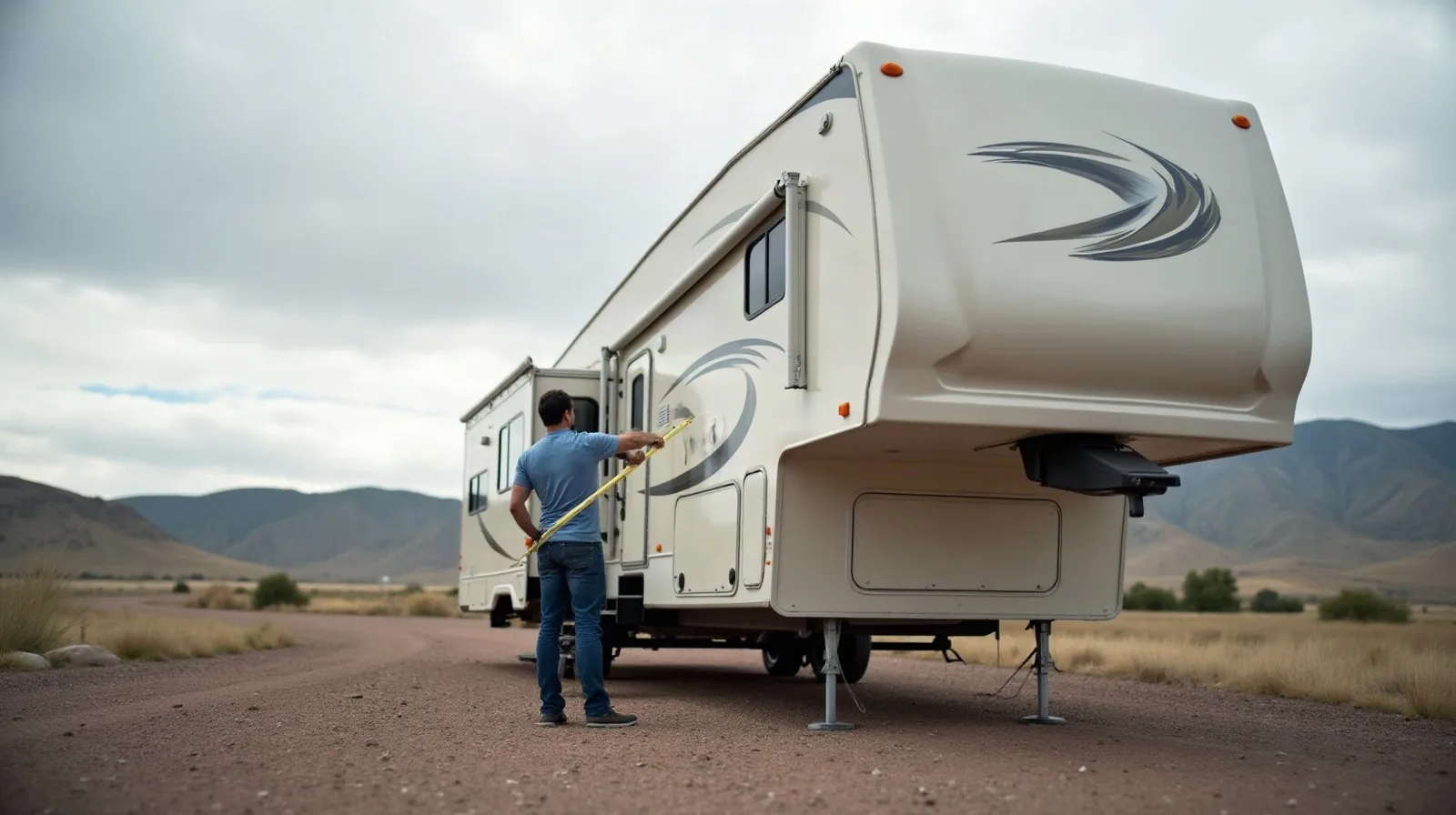
Last April I stood in the gravel yard of a self-storage place north of town, staring at a roll-up door that looked plenty tall until I pulled out the tape, and I started comparing RV storage in Denver by space size and rate. My fifth wheel’s AC shroud sits at 13 feet 4 inches. The door beam was 13 feet even. I’d already paid the admin fee. That’s the moment I learned to measure before I rent, not after.
If you’re looking at RV storage size in Denver or anywhere else, know this: the space you need is usually two feet longer, one foot wider, and one foot taller than the number in your head. Brochures list floor length, not bumper to hitch. Slide-outs stay closed in storage, but mirrors and ladders still stick out. And that canopy clearance painted on the pole? I’d trust it about as far as I can throw a 34-foot fifth wheel.
How to measure your RV the way the storage office will
Forget the brochure. Length, height, width. Those are the only numbers that matter, written the way a claims adjuster would sketch them on a diagram.
Grab a 100-foot tape, a helper, and a step ladder. Length: run the tape from the very front of the hitch coupler or pin box to the rear bumper. Count the spare tire carrier, bike rack, folding cargo tray. On my fifth wheel, the pin box adds 14 inches beyond the front cap. Guess short and you just bought yourself a whole different size category.
Height goes from the ground to the tallest point, which on most rigs is the AC shroud. Put a level across the top and measure straight down to the pavement. Don’t eyeball it. I got 13 feet 4 inches on a flat driveway, and that was with decent shoes and no wind. Width is outside wall to outside wall, but the number that bites is with mirrors extended. A motorhome can add almost a foot per side with the mirrors out. Check both. Write both down.
What RV storage size fits each kind of rig
A 10x20 spot holds a teardrop or a small pop-up. My 34-foot fifth wheel needs a 10x40 at minimum. That’s tight. I back in with roughly 18 inches on each side at the mirrors. A 12x40 costs more, but it’s the diffrence between a three-point turn and a six-point dance with a fence post.
| Rig type | Typical length | Typical height | Suggested space |
|---|---|---|---|
| Teardrop / pop-up | 12-20 ft | 6-9 ft | 10x20 to 10x25 |
| Class B van | 17-24 ft | 8-10 ft | 10x25 to 10x30 |
| Travel trailer | 20-33 ft | 10-11.5 ft | 10x30 to 10x35 |
| Fifth wheel | 25-40 ft | 12.5-13.5 ft | 10x40 to 14x50 |
| Class C | 24-32 ft | 10-12 ft | 10x30 to 10x35 |
| Class A | 28-45 ft | 11.5-13.5 ft | 12x40 to 14x50 |
| Toy hauler | 25-40 ft | 12-13 ft | 12x40 to 14x50 |
Heights are to the top of the AC shroud or antenna. Lengths are bumper to hitch or ladder. Widths all assume slide-outs closed.
I found this video helpful for understanding how manufacturers measure RVs, which is different from what storage facilities need.
Canopy clearance and enclosed doors: the height that matters
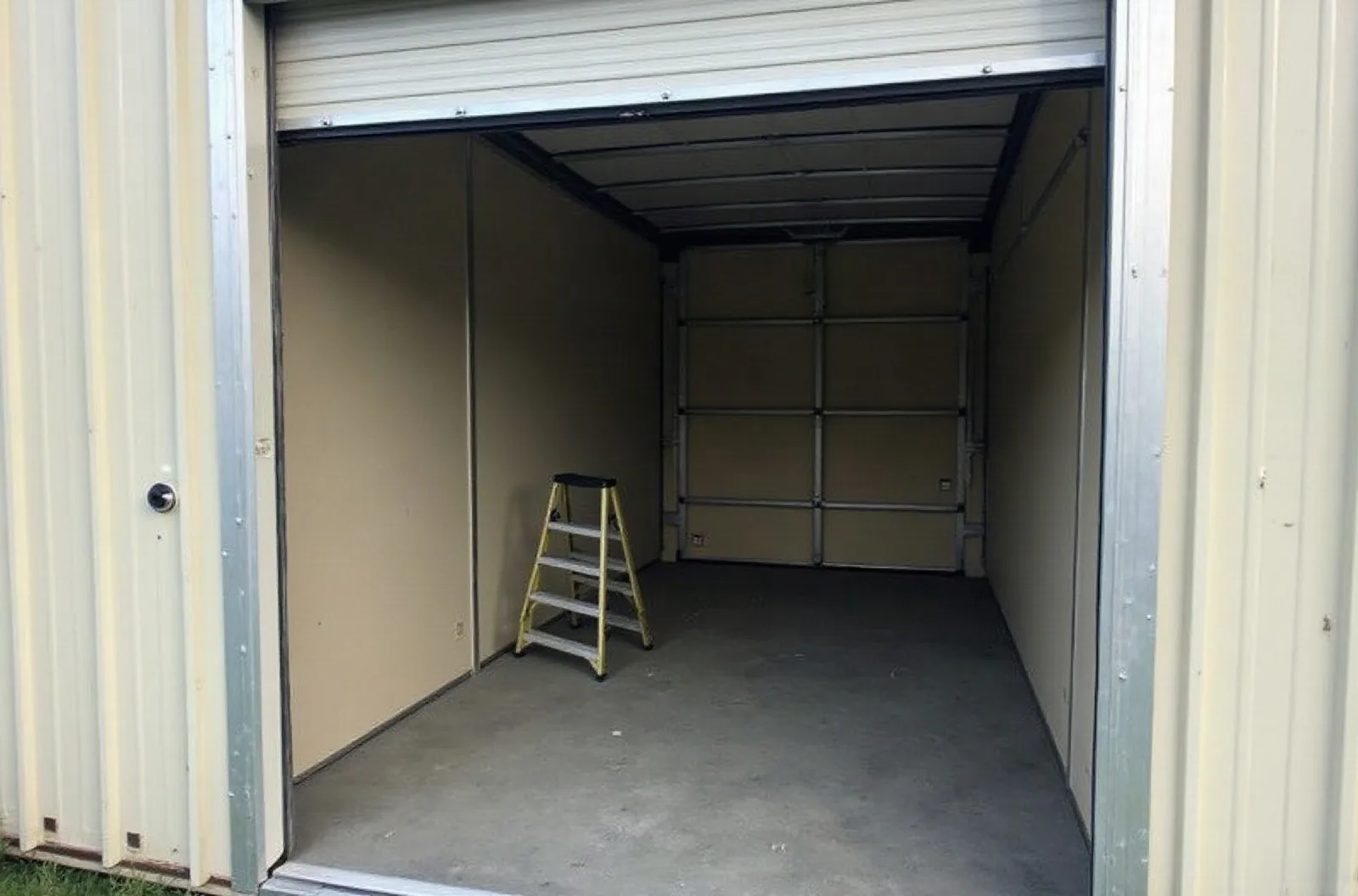
Measure the door or canopy yourself. Bring a laser measure. Check the entrance approach, the grade inside the space, any pipes or lights hanging from the ceiling. My rule: if the posted clearance is less than six inches above your measured height, pass or ask for a different spot. I’ve walked away from a unit over two inches. Not proud of it. Just cheaper.
A covered canopy posted at 14 feet sounds fine for a 13-foot-4 rig. Until you find the rear corner of the lot slopes up, or the canopy beams sag half an inch, or the entrance gutter hangs lower than the sign.
I had a claim on this. A Class A owner pulled under a canopy posted at 13 feet 6 inches. His roof measured 13 feet 2 inches. One hard stop, one AC shroud torn off, $1,800 repair. The facility pointed at the sign and said their measurement was correct. It was. The pavement underneath had a two-inch crown from tree roots.
Back-in or pull-through: choose before you sign
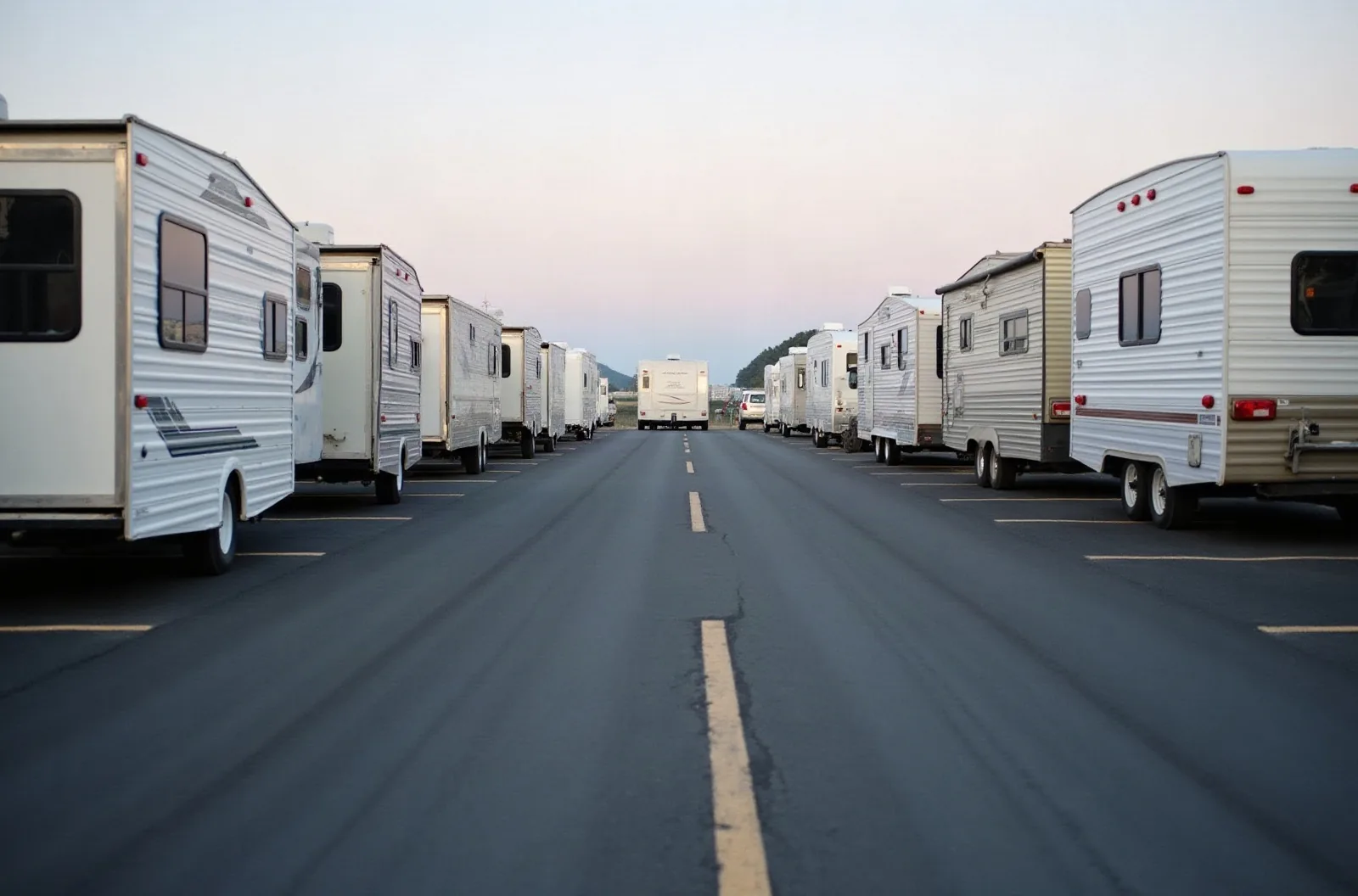
Back-in spaces are cheaper and more common. Pull-through spaces let you drive in the front and out the back. That’s a gift when you arrive at 9 p.m. With a 40-foot fifth wheel and a rainstorm moving in.
The tradeoff isnt just money. Pull-through spaces offen sit at the end of rows with more turning room, but they can be narrower because the facility expects you to drive straight through. Back-in spaces force you to know your pivot point and your mirror blind spots. I back my rig into a 10x40 and on a bad day it takes four tries, even after five seasons.
If the lot has 90-degree rows and you’re over 30 feet a pull-through is worth the extra $30 to $50 a month. Rows angled at 45 degrees? Back-in gets a lot easier. Ask the manager to let you walk the space befor paying, and use our post on RV storage facility as a guide.
The checklist: what to measure and write down
Print this or stick it in your phone notes. Take it to every facility you visit. Fill in the blanks before you talk to the manager.
- Length: tape from hitch coupler or pin box to rear bumper, including racks and spare. Write: ___ ft ___ in
- Height: level across AC shroud to pavement. Write: ___ ft ___ in
- With mirrors extended: outside edge to outside edge. Write: ___ ft ___ in
- Slide-outs closed width, wall to wall. Write: ___ ft ___ in
- Door or canopy clearance at the space your considering, measured by you. Write: ___ ft ___ in
- Add six inches to height for margin. Minimum clearance needed: ___ ft ___ in
- Add two feet to length for walking around and hitching. Minimum space length: ___ ft
- Add one foot to width per side for mirrors. Minimum space width: ___ ft
- Note the gate height at the entrance. Some gates are low, especially older facilities.
- Ask: is the space pull-through or back-in? Is the surface paved, gravel, or dirt? Any slope?
Safety warning: never crawl under the RV to measure somthing while it’s hitched. Unhitch and chock the wheels first. A tape measure and a helper beat a ladder on gravel.
Where the extra cost goes: size vs. features
A 40-foot space costs more than a 25-foot space at the same facility, so a Class A pays more than a teardrop. But rate isn’t just size. Gate access, cameras, pavement, a dump station, 24-hour access, they all push the price up.
Outdoor open lots run about $30 to $150 a month. Covered canopies run $75 to $300. Enclosed units start around $150 and can hit $450 or more for long spaces. Heated indoor RV storage in Denver runs $300 to $700 and up. In a big coastal metro, double the low end.
My rule: the space costs 10% of what the repair costs if you get it wrong. A canopy strike can run $1,500 to $3,000. A flooded gravel lot ruins a fresh water tank. Suddenly a $200 covered space looks cheap.
Check the contract for a rate increase clause. Many storage places bump the rent after six months. Ask abotu move-in specials and prepay discounts, but read the lien terms before handing over cash.
When a carport with storage is the better answer
If you have land and the HOA will allow it, a metal carport with storage beats renting. I priced a 12x41 carport with 14-foot legs for my fifth wheel. Quotes ran from $6,200 to $9,800 installed, plus a concrete pad at $8 per square foot. Over five years, that covers a lot of monthly rent.
A carport usually counts as ‘covered’ storage unless you enclose the sides. Insurance treats it better than an open lot, but worse than a fully enclosed unit. Hail and UV are your main enemies in Colorado, and a roof handles both.
Most cities require a permit. Wind and snow load certification matter more than the gauge of steel, at least in the foothills. And if you add utility storage at one end, you’re into pole barn territory.
If you’re thinking about buying instead of renting, I wrote a seperate piece on our post on RV carport with storage.
My take: measure twice, then walk away from the wrong space
Most people overpay for RV storage because they rent the size they hope they need, not the size they measured. They take a 14-foot-wide space for a Class C that fits in a 10-foot spot and pay $40 a month extra for nothing. Or they rent a 10x30 for a 31-foot travel trailer and scrape the tongue every time.
Do this test next weekend. Stand at the back corner of your rig with a tape measure and a level. Measure height and length yourself. Then check the clearance at three different storage facilities, not one. I’ll bet one of them has a door or canopy lower than the posted sign.
Then go to the facility’s website or call and ask for the month-to-month rate on the exact space size you wrote down. Ask about the admin fee, the insurance requirement, and the rate increase clause. All of it is negotiable in the first five minutes if you know you’re numbers.
Related reading
FAQ
What is the most common RV storage size?
For travel trailers and smaller fifth wheels, 10x30 and 10x35 spots are the workhorses. Class A motorhomes usually need 12x40 or longer. A 10x20 fits only teardrops and pop-ups. Measure your rig's length and add two feet for margin.
How tall do RV storage doors need to be?
Enclosed unit doors are commonly 12 or 14 feet tall. Measure your rig to the highest point, usually the AC shroud. Add at least six inches. If your RV is 12 feet 11 inches, a 12-foot door won't work. A 14-foot door gives margin for slope and roof debris.
Do I need indoor or covered storage for my RV?
Covered storage protects against sun, hail, and rain but not windblown dust. Indoor storage also keeps out pests and theft risk. If you have an expensive roof with sealant that fails in UV, covered or indoor is worth the premium. Open lot is fine for a beater trailer.
How much does an RV storage space cost per month?
Typical ranges: open lot $30-$150, covered canopy $75-$300, enclosed unit $150-$450, heated indoor $300-$700 plus. Big coastal metros can run higher. A longer space costs more than a shorter one at the same facility. Prepaying six months often earns a discount.
Can I store my RV in my driveway?
That depends on your city code and HOA. Many HOAs limit RV parking to 24 to 72 hours for loading and unloading. City codes often ban parking a rig on the street overnight. If you have a side yard behind a gate, you may be allowed to build a pad. Check first.
What insurance do I need for RV storage?
The storage facility usually requires proof of comprehensive coverage, which covers theft, vandalism, fire, hail, and wind. Collision isn't needed for a parked RV. Many insurers offer a storage or lay-up option that suspends collision and saves money while keeping comprehensive.
How do I prepare my RV for storage?
Dump tanks, drain water system, winterize with RV antifreeze if it might freeze. Close propane valves, charge or remove the battery, add fuel stabilizer if motorized, inflate tires to placard pressure, clean the roof, remove all food, set traps. Leave slide-outs in and awning secured.
Find storage near you
Compare covered, indoor and open RV storage in your city, then ask a few places for their current monthly rate.
Browse by state