9 RV sewer hose storage ideas that don't stink up the bumper
By Rhonda Keel · November 1, 2026
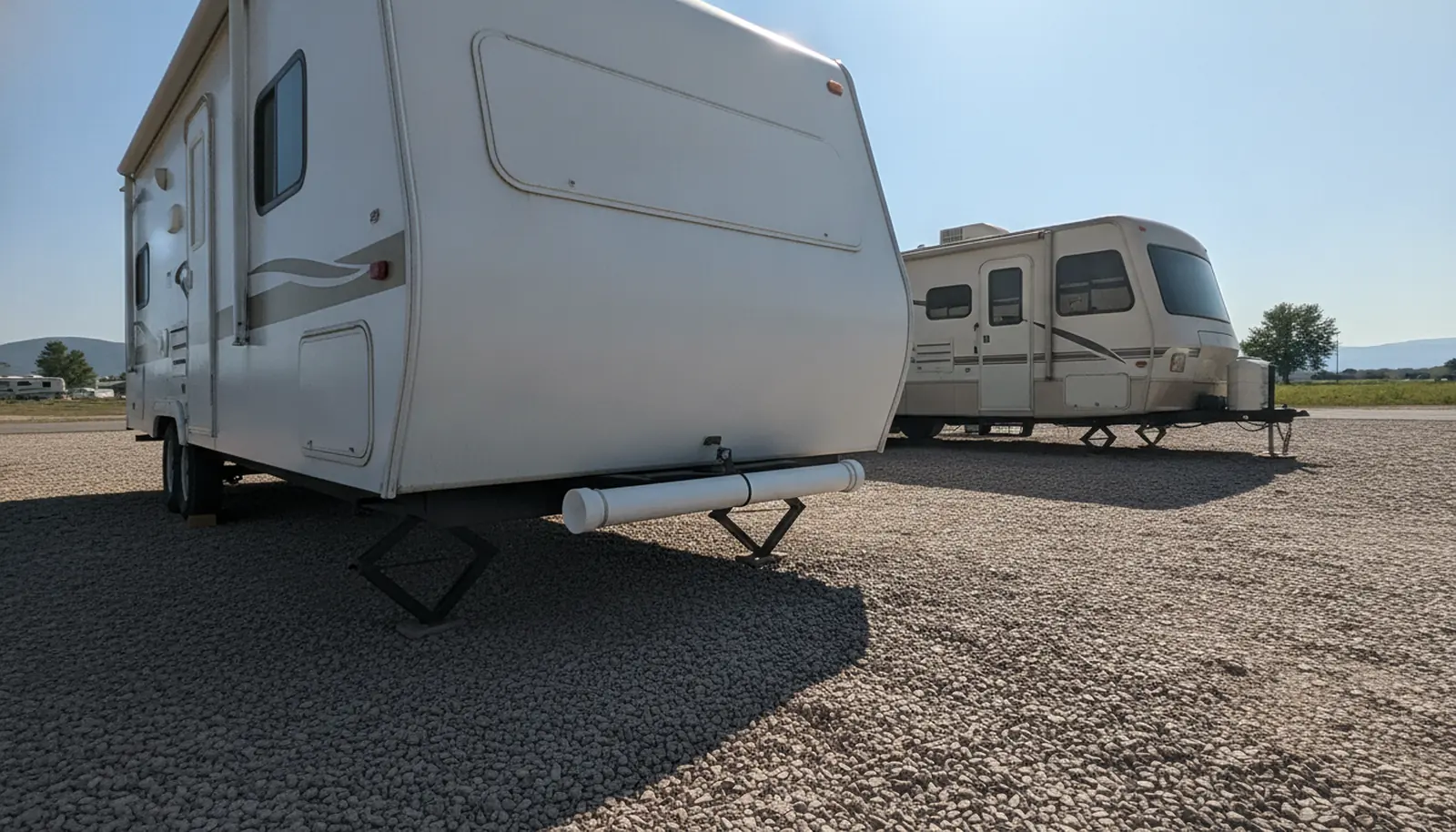
Last March I was on I-35, pointed toward San Antonio, kids conked out in the back seat. Somewhere near New Braunfels I heard a clang from behind the trailer. Caught the side mirror just in time to watch the end cap pop off that hollow rear bumper and my sewer hose fly out like a gray snake at 65 miles an hour. That was the day I started actually looking at RV storage in San Antonio. Not that a storage lot would have stopped the cap from popping off, but it got me thinking about how I treat this rig when I’m not using it, and that led me to compare monthly parking in San Antonio for a spot where I could keep the trailer and check on things properly. I found the hose later, mangled on the shoulder. Forty-two bucks for a replacement at a parts shop in Schertz. So much for the bumper being storage. Now I look hard at covered spots in San Antonio because sun and rain out in the open just chew through everything. If your comparing RV storage in San Antonio or looking around Austin RV storage, the hose question matters as much as the parking spot. A nasty hose can make a clean rig smell like a porta-potty, and a cracked bumper can scatter your gear accross the highway. I check climate controlled storage in San Antonio when I need a spot, and I’ve learned a few things about keeping the sewer hose contained and drained, even when the trailer sits in indoor storage in San Antonio. Nine of them, actually.
1. RV sewer hose storage in the hollow bumper (and why it rusts and cracks)
Looks perfect in there, right? It’s not. Inside that rear bumper its thin steel, usually bare, and it traps water. Stuff a damp sewer hose in there and the thing rusts from the inside out in two seasons. I hit a pothole on I-35 and the cap went flying. The hose followed. If you insist on the bumper, at least clean it, dry it, and drill a couple drain slots in the bottom. Most trailer bumpers are only rated for 100 to 200 pounds, and plenty of them aren’t load-rated at all. A full hose weighs plenty when it’s soaked.
2. A frame-mounted tube (DIY fence-post or PVC style)
This is the setup I built the weekend after the I-35 mess. One 5-inch square vinyl fence post, two end caps, a pair of U-bolt clamps. About sixty bucks total, mounted under the frame right behind the rear axle. You could do a 6-inch round PVC pipe with a screw cap instead. Don’t go drilling into the frame, that weakens it. Use U-bolts or heavy zip ties rated for 100 pounds or better. I ran the tube crosswise under there, slightly sloped so any water runs out instead of sitting.
3. A dedicated lidded tote in a wet bay
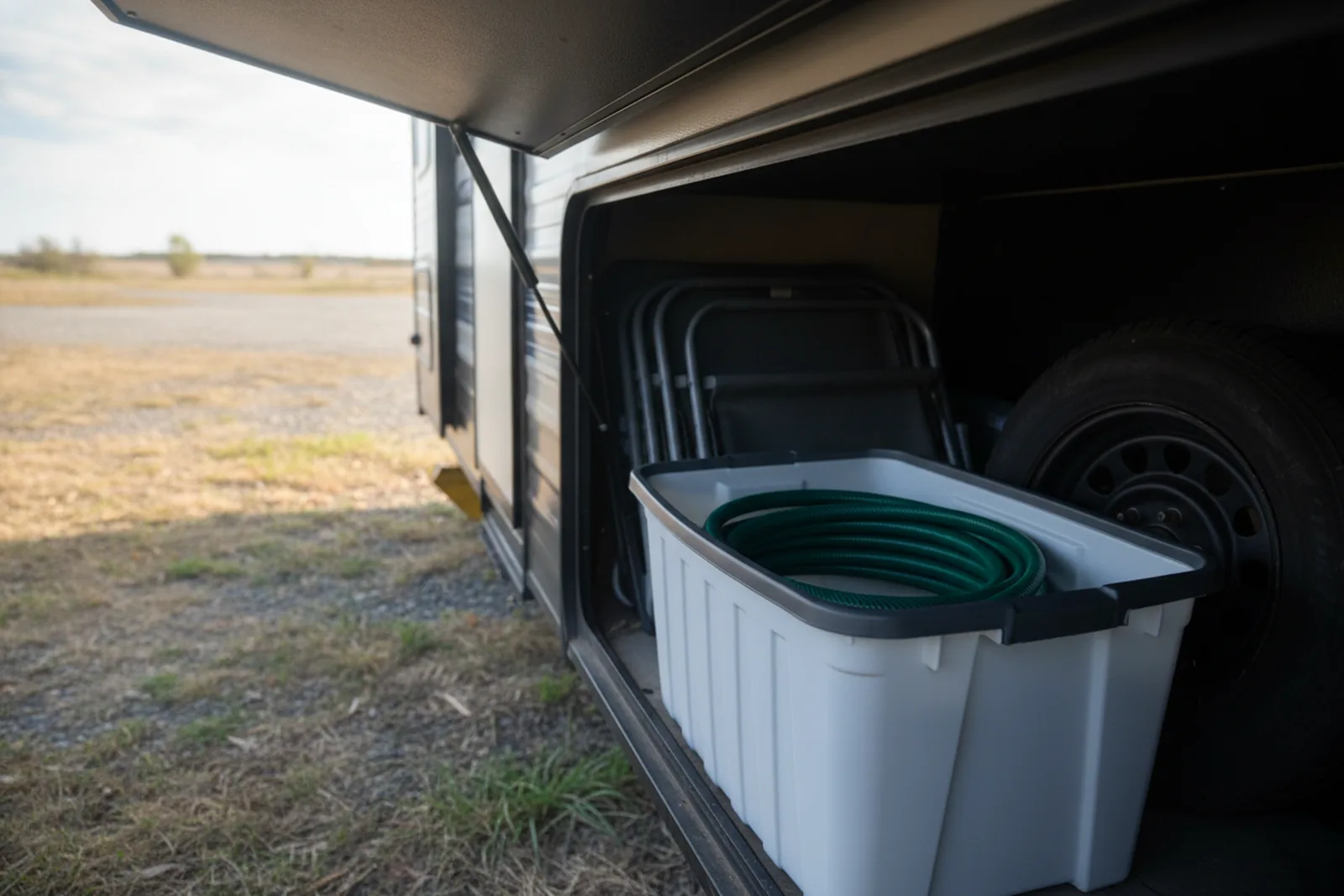
If you’ve got a pass-through or a wet bay, a plastic tote is about the easiest fix there is. Mine’s a 34-gallon lidded thing from the hardware store. Fits the 15-foot hose, a 10-foot extension, the clear elbow, and gloves. I drilled three little holes in the bottom so it drains, and I toss a cheap shower curtain liner in there because something always leaks.
4. The wet bay or utility compartment
A few fifth wheels and big Class A rigs have a separate bay meant for the hose, sometimes with a reel already mounted. Lucky folks. At a covered lot in San Antonio I had a guy show me his: a plastic bin with a snap lid, bolted to the floor of his wet bay, silicone around the edge. Simple, sealed, done.
5. Hose bags
A heavy vinyl hose bag is a quick fix, not a lasting one. I’ve used one on short trips and it’s okay if you rinse the the hose and let it dry first. I leave the bag unzipped in the bay so it airs out. In Pflugerville I’ve seen bags strapped to ladders and rear bumpers at an outdoor lot. Looks tacky, and stuff walks away. The bag beats nothing, but it isn’t my first pick for monthly RV parking.
6. A tube under the slide or along the rear
If your frame’s already full, look above the frame rail, under a slide-out, or along the rear crossmember. A buddy of mine hung an 8-foot section of 5-inch square fence post at an angle under his toy hauler, screw cap at the low end. I’ve seen 4-inch PVC painted black, galvanized U-bolts, run from the rear bumper to around the midpoint. Keep it at least flush with the frame rails, never below.
I found a clever way to store the sewer hose using a fence post tube in this video.
7. Rinse and drain before storage
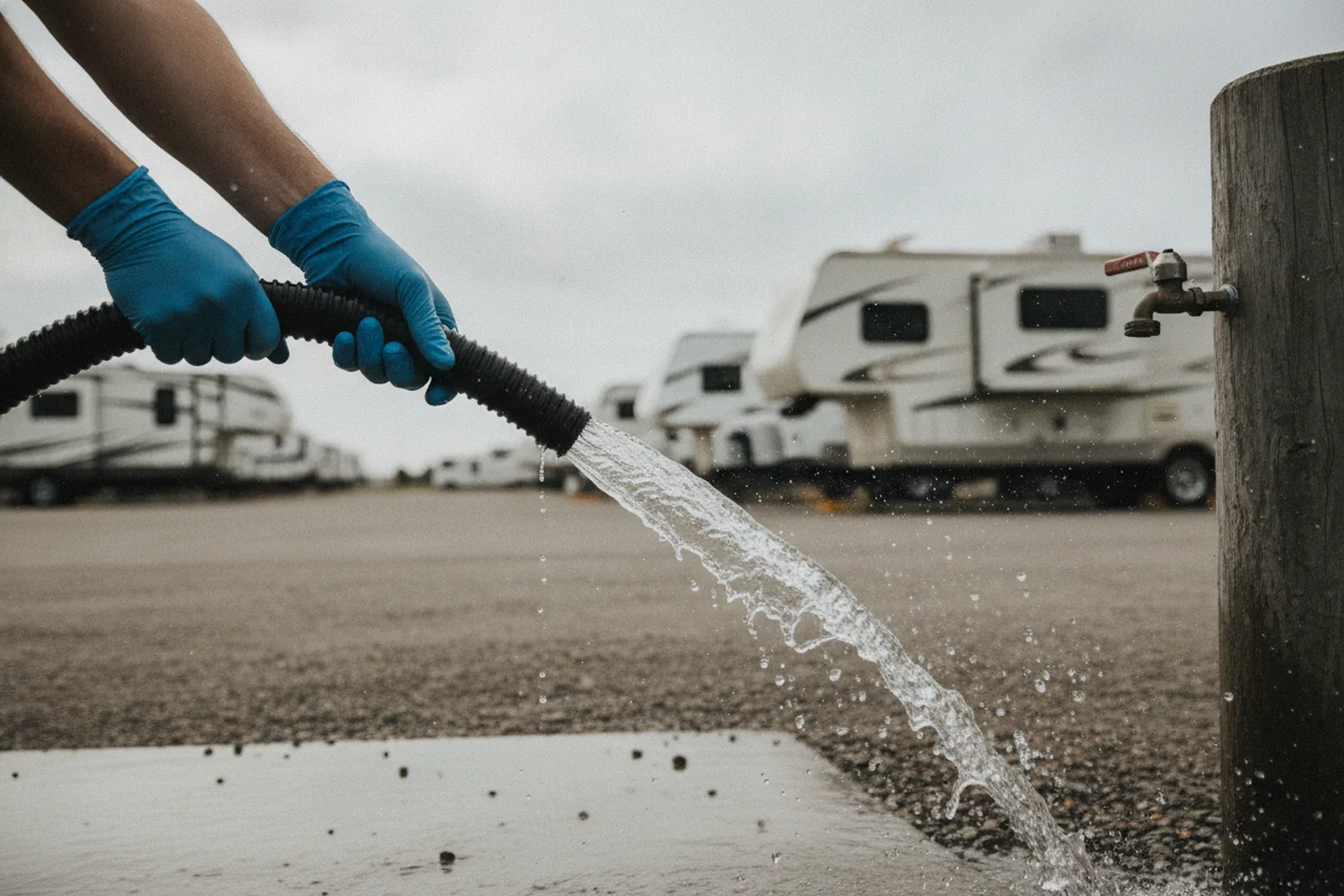
This is the part people always skip. After I dump the black tank, I run fresh water through the hose with a hose-end sprayer, then I hold one end up and let it drain out. At the dump station, use the non-potable spigot for that rinse. Never the drinking water one. And here’s the trick I learned the hard way: coil it starting from the middle so both ends hang down while you walk. Water runs out instead of pooling in a low loop.
8. Keep the fresh water hose far away
My sewer hose and my drinking water hose never sit together. They’re on opposite sides of the pass-through, in diffrent bags. Blue bag for fresh, tote for the sewer. Cross-contamination is not a joke. A nasty GI bug will ruin a trip faster than a blowout. If you’ve got an indoor unit or a climate controlled spot in San Antonio, you’ll smell your mistake pretty quick if you mix them up.
9. Gloves and fittings kit stored with it
The hose isn’t the only mess. I keep a pair of rubber gloves in a ziplock taped inside the tote lid. Replace them every season. My kit has a spare bayonet cap, a 45-degree clear adapter, and a little tube of silicone lube. Under a pound total. Saves me digging through the same bin as the outdoor rug. At a monthly lot in San Antonio where the gate is shared and the dump station is a 200-foot walk, having the kit handy gets you in and out in ten minutes. Otherwise it’s thirty, easy.
What I’d tell my brother if he just bought a trailer
The sewer hose is the least fun thing about owning an RV. But it’s the first thing people notice when they roll past your site. A hose bag slung over the ladder? That screams rook. I like a drainable tube under the frame or a sealed tote in the bay. Took me two years and one interstate scare to learn that.
This weekend, pull the hose out of wherever it lives and lay it on the driveway. If you can smell it from three feet, it’s wet or it was put away wet. Rinse it, drain it, give it a better spot before the next trip. And if you’re looking at storage lots around your town, ask about a dump station on site. Turns the grossest chore into a five-minuite stop. Check the rates for covered, indoor, or climate controlled RV storage in San Antonio, or wherever you park, and weigh that against having a clean, dry hose bay.
Related reading
FAQ
Can I store my RV sewer hose in the bumper?
You can, but I don't. Those bumpers aren't rated for much and they rust from the inside. If you do it anyway, drill drain slots, dry the hose before it goes in, replace the caps now and then. A tube or a tote beats the bumper any day.
How long does an RV sewer hose last?
Rinse it, keep it out of the sun, and you might get three to five years out of a good one. UV eats the vinyl, so keep it in a tube or bay. Pinholes and cracks mean it's done. I swap mine evry three seasons.
Should I leave my sewer hose connected at a full hookup?
No. Hook it up only when you dump. Gray valve can stay open if you want, but keep the black closed till the tank's at least two-thirds. A hose sitting out in the sun while connected will degrade faster.
What is the best sewer hose storage tube?
Five-inch square vinyl fence post or 6-inch PVC under the frame works great. U-bolt clamps, a drain hole, slight slope. Usually $50 to $100 all in.
How do I get the smell out of my RV storage bay?
Pull the hose out. Wash the bay with soap and water, then let it dry completely. Sprinkle baking soda around, set a small bowl of coffee grounds in there for a day. Don't put a wet hose back in. A sealed tote stops the smell from spreading in the first place.
Can I rinse my RV sewer hose with the fresh water hose at the dump station?
Nope. Use the non-potable spigot, and only that one. Your fresh hose should never get near the sewer hose or its fittings. Separate bags, seperate bins, never the same tote.
Find storage near you
Compare covered, indoor and open RV storage in your city, then ask a few places for their current monthly rate.
Browse by stateOr jump to: Sacramento, CA · El Paso, TX · Conroe, TX