RV Self Storage vs Dedicated RV Yard: What I Learned
By Rhonda Keel · November 1, 2026
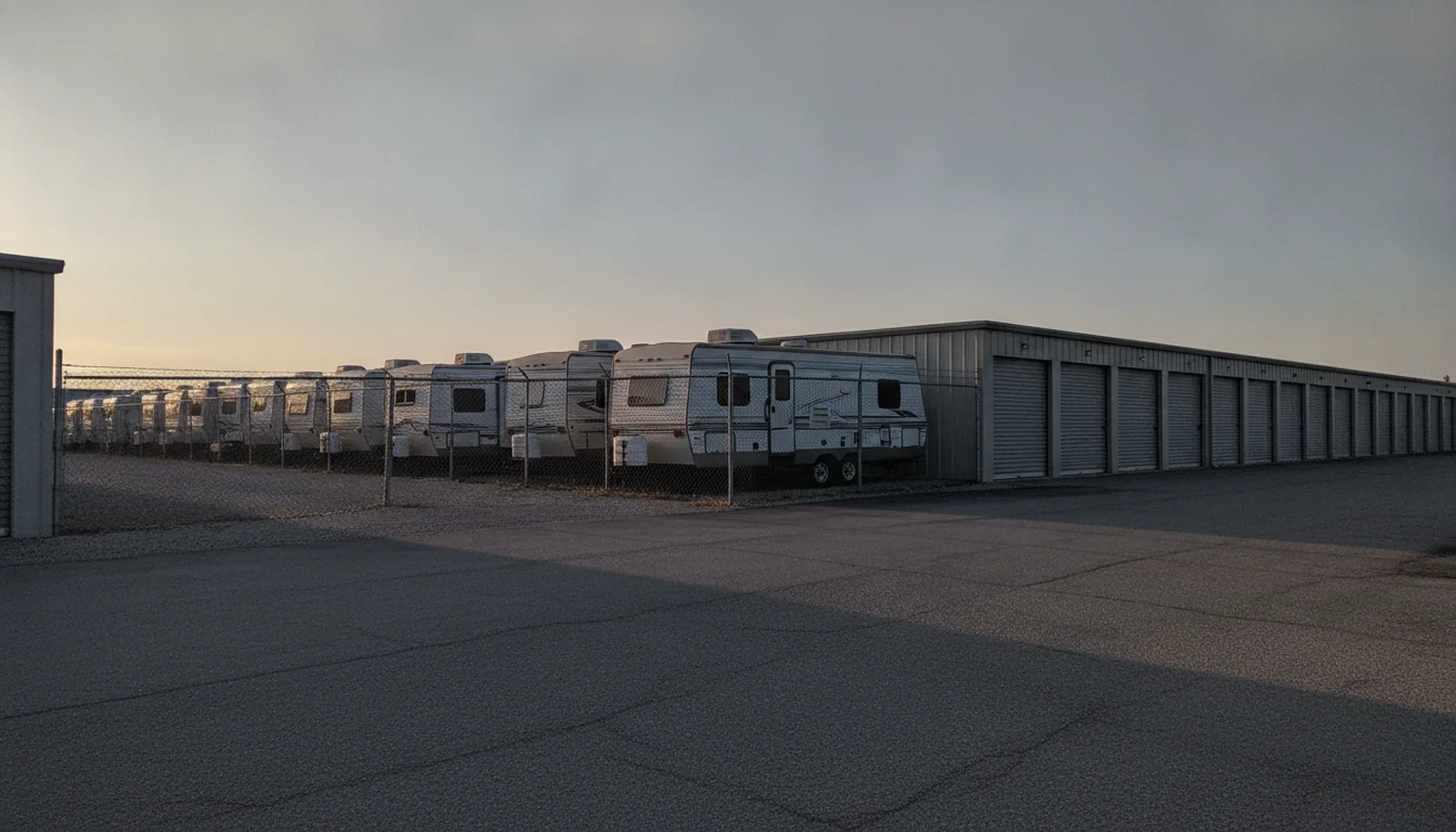
Saturday, April 9. Fort Worth, Texas. My husband Mike is waving both arms like a third-base coach while I back our 28-foot bunkhouse travel trailer into the last row of a self-storage lot off I-35W, not far from RV storage in Dallas. Three tries. The back corner misses a chain-link fence by maybe four inches. The monthly rate was $65. Two months later I moved the trailer to a dedicated RV yard eight miles closer to the house, which offered covered spots in Fort Worth for not much more. It costs $30 more a month. I pay it gladly.
When people ask me about RV self storage, they usually mean the cheapest fenced lot on the map, like the outdoor lots in Dallas that start around $50 a month. But there’s two very different animals hiding behind that phrase: a general self-storage property with an RV strip along the back fence, and a yard built from the ground up for rigs like ours, not to mention indoor units in Dallas for those that want full protection. I’ve used both. This is what I learned.
If you’re shopping around the Fort Worth area, start by looking at RV storage in Dallas and then compare prices accross the metro, or check out 9 places to keep a travel trailer when the HOA says no.
Where the difference starts: aisle width and turning room
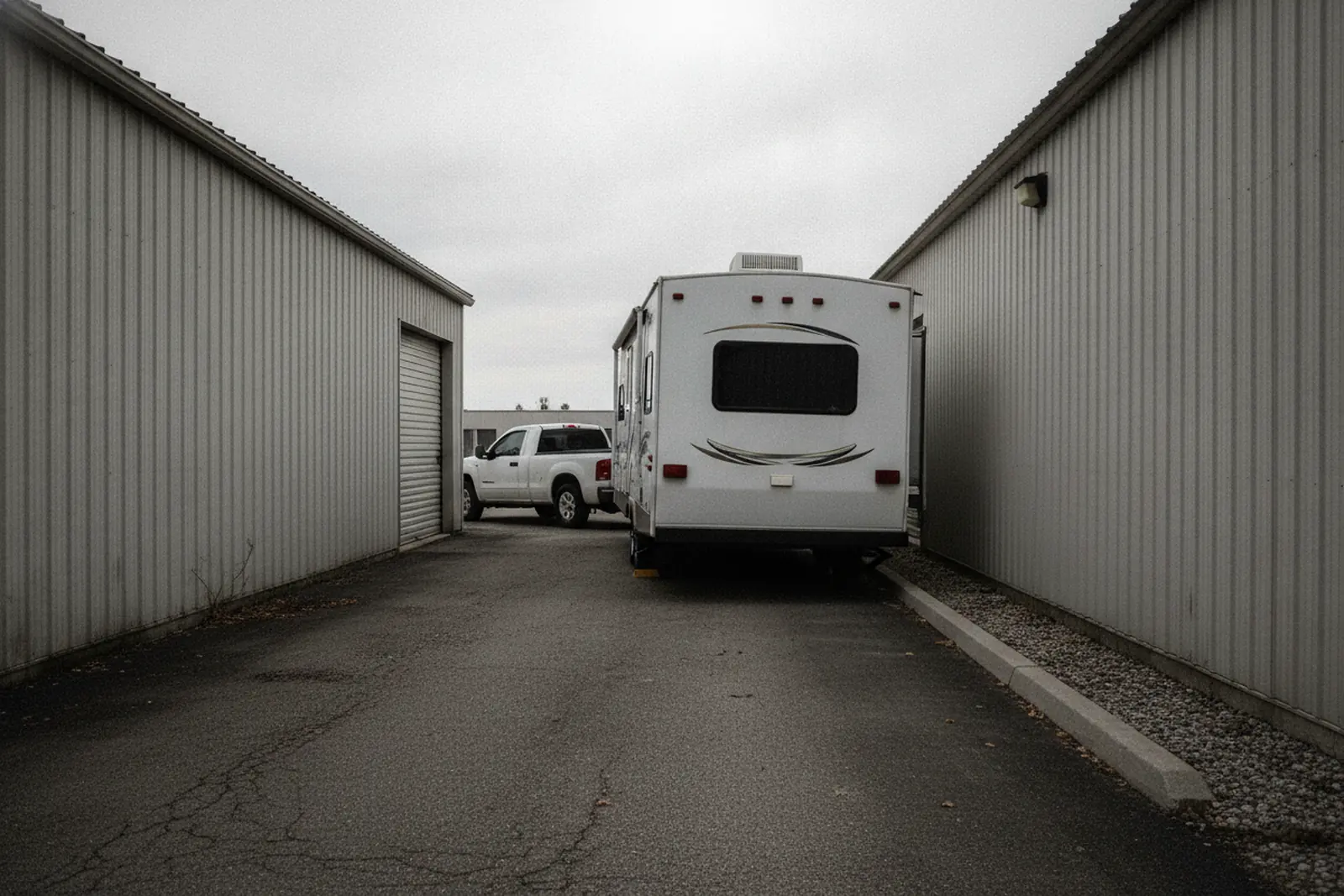
The first reason I moved was the aisle. Mike waved. I cussed.
If you’re comparing a self-storage RV pad to a dedicated yard, measure the turn before you sign, and check whether covered storage in Dallas is worth the extra cost for your rig. Go on a Sunday morning, bring a 100-foot tape, and mark where your rear bumper will pass. If the aisle is under 40 feet wide, a 30-foot trailer will fight you. A 40-foot fifth wheel will be even harder.
Here’s what I’d look for in any facility, including climate controlled options in Dallas if you store thru the summer:
Does RV self storage have a length limit?
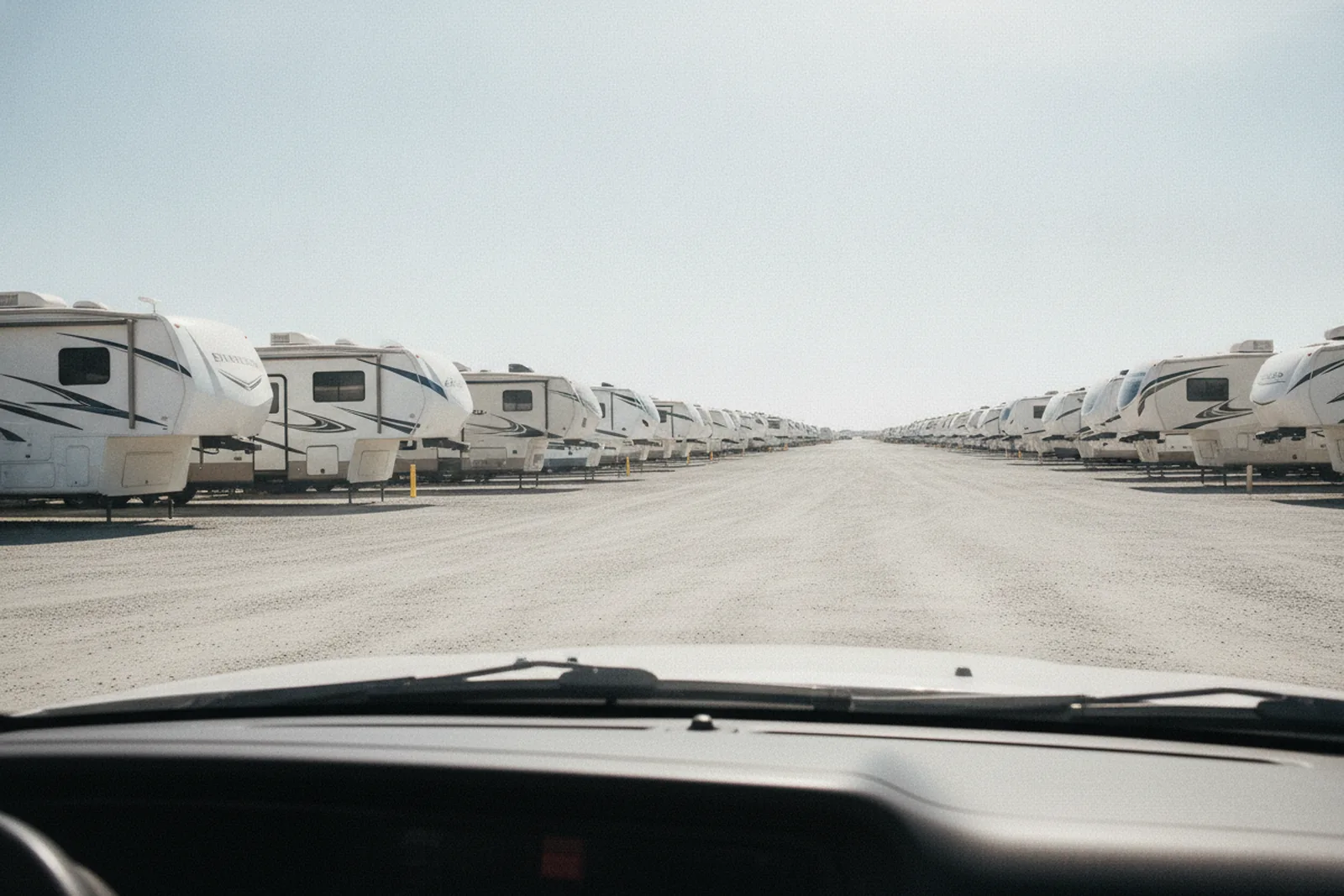
Almost always, yes. Most general self-storage properties cap RVs at 30, 35 or 40 feet, and they measure length. If you own a 43-foot toy hauler, you might not even fit. Purpose-built RV yards in this area regularly offer 14x50 spaces. Some have pull-throughs that are longer. The difference is not price; it’s geometry.
A 10x30 space at a self-storage place looks cheap until you realize a 28-foot travel trailer can be over 30 feet with the tongue and spare tire. Ask for the facility’s written length limit, not the listing’s. Then add one foot for a bike rack and another if you back in with the truck still attached.
Cost comparison: self-storage RV parking vs a dedicated yard
Rent is where self-storage wins, usually, but you can learn how I cut my bill without parking in a dirt field. So you’ll pay a premium of roughly $20 to $50 a month for the room and the amenities. That’s one takeout dinner a week. For me it was worth it the first time I pulled in on a rainy Friday after dark.
Here’s a quick look at typical self-storage RV parking versus dedicated yards:
| Feature | Self-storage RV parking | Dedicated RV storage yard |
|---|---|---|
| Aisle width | 24 to 36 feet typical | 40 to 60 feet typical |
| Space length | 20 to 40 feet, often capped | 30 to 60 feet, pull-throughs common |
| Gate hours | 6am to 10pm typical, some 24hr | 6am to 9pm, some 24hr for a fee |
| Gate tech | Keypad code, sometimes app | Keypad code, old-fashioned lock and key common |
| Dump station | Rare | Common |
| Air and water | Rare | Common |
| Who else is there | Household storage, small trucks, cars | RVs, boats, commercial trailers |
| Monthly rent (open) | $50 to $100 | $80 to $200 |
| Contract style | Month-to-month, rate climbs after intro | Month-to-month or small lease, fewer games |
Prices vary by city. If the self-storage lot is only $10 cheaper, the dedicated yard is a better deal.
The gate, the cameras, and the 10pm dilemma
Both kinds of lots have electric gates and keypad codes. We don’t need it often, but knowing I can un-hitch at 11:30pm after a blowout on I-20 is worth ten bucks. Some places will give you a code for a pedestrian gate but not the vehicle gate after hours.
Camera coverage is another story. Self-storage places tend to have cameras in every aisle because the units hold household goods. The RV strip behind the units often sits in a dark corner with one camera on a pole. Dedicated RV yards are usually lit end to end, with cameras on every row. Ask where the cameras point, not just how many there are.
RV self storage: what the contract actually says
Read it. I almost didn’t.
- Rate increases.
- Lien rights. Timelines vary by state.
- Insurance. If you can’t, they’ll sell you a tenant protection plan that is often not real insurance and usually pays only a few thousand dollars. For a $40,000 fifth wheel, that’s almost nothing.
- Vehicle restrictions. Some lots ban propane tanks, require batteries disconnected, and forbid you from doing any repair on site. One lot in Arlington woudl not let me change a flat tire inside the gate. I had to drag the trailer to the street.
Before you sign, read the insurance clause out loud. Then call your own insurer and ask for comprehensive coverage on the RV, even while parked. Many companies offer a storage or lay-up option that drops collision and sometimes liability but keeps comprehensive. For a travel trailer, comprehensive typically covers theft, fire, hail and wind, but check your policy. That’s what you’re actualy worried about. If your insurer won’t do it, look at climate controlled RV storage in Dallas where the building itself blocks most hail and UV.
Amenities: the reason I pay more
At the self-storage lot, there was no dump station. No air. No water. That sounds small until you’ve spent a Sunday scraping lovebugs off a 28-foot front cap in your driveway while the HOA president watches from across the street. They’re also the reason I get home at 4pm instead of 7pm after a trip.
- Dump station: is it free, or coin-operated? Free is common at smaller lots.
- Air compressor: what PSI does it reach? Trailer tires often run 65 to 80 PSI, but check your tire placard. A gas station air pump won’t cut it.
- Water: potable or non-potable? Some yards only offer rinse water.
- Wash bay: covered? Fee? Does the runoff go to a drain or a dirt patch?
- Electric: some covered and indoor spaces have a 15-amp outlet for a battery maintainer. Open spaces rarely do.
Who else is parked next to you
This one surprised me. Doors slammed. At the dedicated RV yard, the worst neighbor I’ve had is a couple in a 41-foot Montana who polished there wheels every weekend. The gates open at 7am, and by 9am half the lot is gone to the lake. It feels less like a storage unit and more like a campground parking lot without the campground.
If security matters to you, a dedicated yard will usually have more RV-loving eyes on the property. A crook with a cordless grinder can cut a lock quickly no matter who owns the fence. Good lighting and a visible camera are worth more than a fancy gate code.
If you want to see how someone else handles the process, this video walks through the basics.
The Saturday morning test
Here’s my rule now: never rent an RV space without driving the aisle with your own rig. Pay the extra $30 for the wider aisle.
Start with the comparison pages for your city. Then visit two lots in person: one self-storage with an RV strip, one dedicated RV yard. Walk the fence line. Check the gate hours. Ask about the rate increase schedual. You’ll know within ten minutes which one feels like a place you’d leave a $30,000 camper. I’d rather spend a little more and sleep. You will, too.
Related reading
FAQ
How long can an RV be for self-storage?
Most general self-storage properties cap RV length at 30 to 40 feet including the hitch and bumpers. Some only take trailers up to 28 feet. Purpose-built RV yards often have 50-foot or longer spaces. Always ask for the written length limit and measure your rig bumper to hitch before signing.
What does RV self storage cost per month?
Outdoor or uncovered RV self-storage spaces typically run $50 to $100 a month in most markets. Covered canopy spots run $100 to $300, and indoor units run $150 to $450. Big coastal cities can double those ranges. Prepaying 6 or 12 months often earns a free month or 5 to 10 percent off.
Can I live in my RV at a storage facility?
No. Almost every self-storage and RV storage lease prohibits living in the rig, running a generator, or staying overnight. Some allow you to work on it lightly, but most ban major repairs. It's storage, not a campground. Check the house rules before you sign.
Do I need insurance for RV storage?
Most facilities require proof of RV insurance, usually comprehensive and sometimes liability. The facility's own policy covers the building, not your rig. Comprehensive covers theft, fire, hail and wind while parked. Ask your insurer about a storage or lay-up option that suspends collision but keeps comprehensive.
What's better for a big fifth wheel: self-storage or an RV yard?
A dedicated RV yard is almost always better for a big fifth wheel or Class A coach. Aisles are wider, spaces are longer, and pull-throughs are common. Self-storage RV strips are often too tight for a 35-foot-plus trailer. Measure the turn radius and aisle width before you commit.
Can a storage facility sell my RV if I miss a payment?
Yes. Every state has a self-storage lien law. After you miss payments and receive the required legal notices,the facility can deny you access and eventually sell or tow the RV. Timelines vary by state. Read the lien clause in the lease and don't let rent slide without talking to the manager.
Find storage near you
Compare covered, indoor and open RV storage in your city, then ask a few places for their current monthly rate.
Browse by stateOr jump to: Orlando, FL · Fort Worth, TX · Oklahoma City, OK