RV storage units: how they differ from parking and self-storage
By Rhonda Keel · October 29, 2026
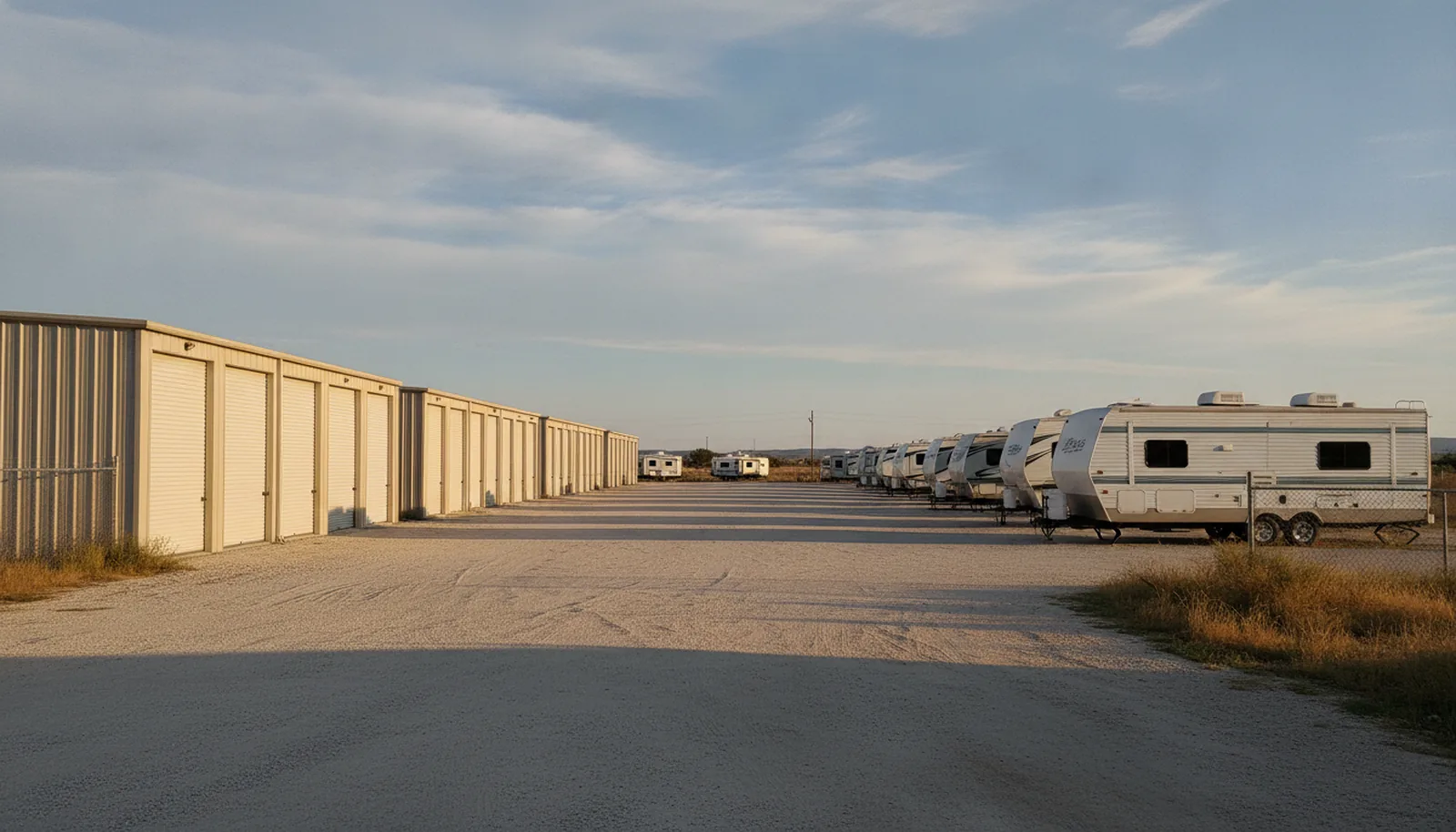
The Saturday after the HOA letter landed, I stood in the driveway with a measuring tape and a cold cup of coffee. Our 28-foot bunkhouse travel trailer had been parked right there for nine months, and suddenly the association gave us 30 days to move it. I did what I always do. Opened the laptop and searched RV storage in Fort Worth. First folks to pick up quoted me $210 a month for a 10x30 self-storage locker, which is within the typical indoor range but high for a locker that might not fit. That sounded steep for indoor RV storage but I nearly took it anyway before I remembered the tape measure and thought to check outdoor RV storage rates too. Our trailer is 28 feet bumper to hitch,plus the spare tire carrier and the bike rack hanging off the back. A 30-foot locker with a 12-foot roll-up door sounded good on paper. Door opening was 8 feet wide, which is common for self-storage lockers but too narrow for many RVs. Our trailer is 8 feet 4 inches wide, which is close to the maximum legal width of 8.5 feet. In Fort Worth or anywhere else in Texas, “unit” can mean a strip of gravel, a steel canopy, a walk-in garage, or a self-storage locker that will never fit your rig. I started looking at RV storage across Texas just to see what else was out there. Those first 24 hours of pricing taught me more than the HOA letter ever did. Especially once I dug into monthly parking rates around Fort Worth.
The four kinds of RV storage units (and what “unit” usually means)
A self-storage place might rent a long locker they call an RV unit. It is usually 10 or 12 feet wide with an 8-foot door, built for boats and box trailers. Not a travel trailer with a 102-inch body. I kept a comparison chart on the kitchen table while I made calls, and it looked like this:
| Kind of space | Protection | Typical access | Typical rent position |
|---|---|---|---|
| Open outdoor space | Fence and gate only | 6 a.m. to 10 p.m. common | Lowest, $30 to $150 a month |
| Covered canopy | Roof over the RV | Same gate hours, sometimes 24-hour | Middle, $75 to $300 a month |
| Enclosed indoor unit | Full walls and door | Keypad gate plus your own door | Higher, $150 to $450 a month |
| Self-storage locker | Full enclosure | Usually no drive-up for big rigs | Often misapplied, can be high |
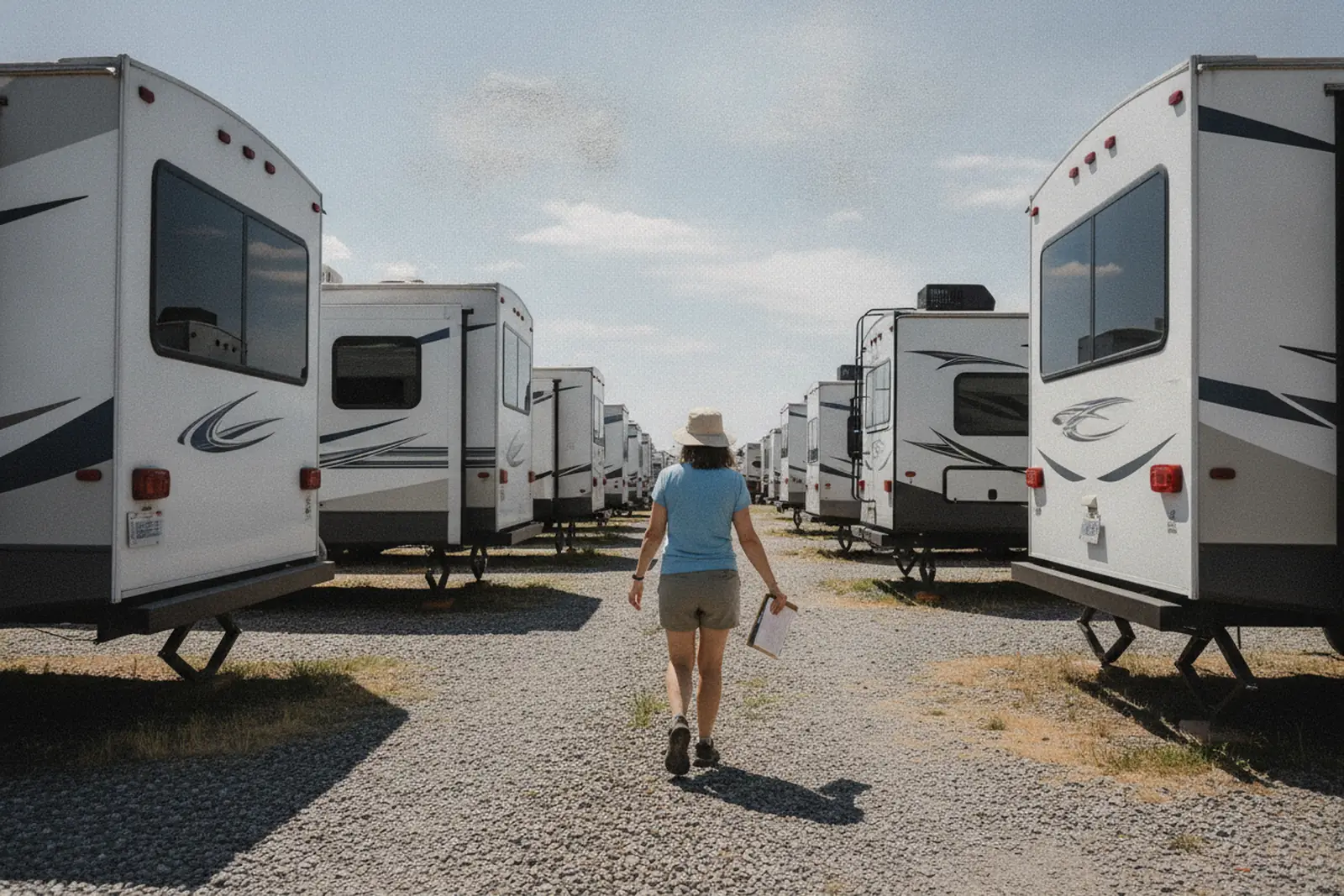
I priced outdoor RV storage in Fort Worth first, then covered spots in Fort Worth, then indoor RV storage in Fort Worth. What I learned was to ask the next question: what exactly is the space? Some lots call a 12-foot-wide canopy an “RV storage unit” and a fifth wheel fits fine. Others call a 10x30 locker the same thing and it does not.
Sizes that actually matter: length, width, and the door you forgot to measure
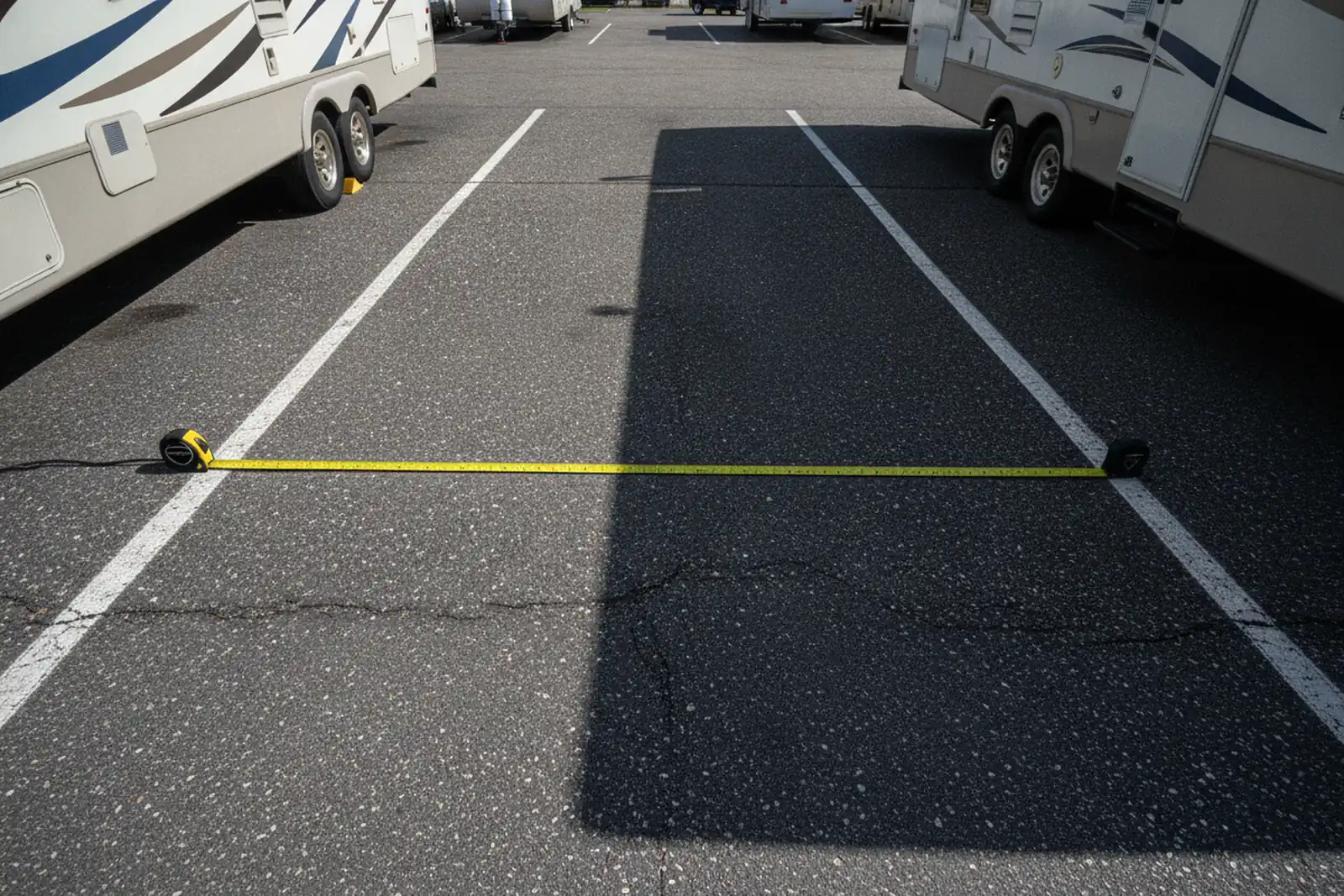
Measure the rig, not the brochure. Our trailer’s brochure says 28 feet. The tape measure said 30 feet 2 inches from bumper to the tip of the coupler. And 31 feet 9 inches to the back of the bike rack. Our travel trailer stands 11 feet 2 inches at the air conditioner shroud. Covered canopies usually promise 12 to 16 feet of clearance, but the posted number is the number that matters, and I want a few inches of margin. Indoor RV storage doors are commonly 12 or 14 feet tall, which clears almost anything legal on the road. Still confirm before you hand over a deposit.
What is included in the rent, and what costs extra
The base rent is never the whole bill. Insurance is the big one. Almost every facility wants proof of comprehensive coverage on the rig, or they push a tenant protection plan that is not real insurance and only covers a few thousand dollars of contents. I carry full coverage on our trailer, so I emailed my policy declarations page and skipped the add-on. Prepaying six months got me a free month at the place I picked, which brought the effective rate down about 12 percent, a common discount. If you compare monthly RV parking in Fort Worth, ask for the all-in number. Rent, admin fee, required lock, any deposit, and the insurance surcharge if you cannot prove coverage.
The paperwork they will ask for before you back in
Every place I toured wanted the same stack. Some lots also wanted a current photo of the rig, the license plate, and the driver’s side. One stricter facility asked for a photo of the propane tanks closed and the slide-outs in. It felt like a lot, but it protects the lot from abandoned or stolen vehicles. That dated photo set helped me file a hail damage claim two years ago. Cost me nothing.
Rules that surprise first-time renters
The first contract I read had a rule against “living, sleeping, or cooking” in the RV while it sits on the lot. Propane tanks must be closed, and some lots require them removed. No leaving your car in the space unless the lot allows it, becuase each space is rented for one RV. I also learned many facilities will not let you run a generator or use a space heater. The manager at our old lot said it straight: “This is storage, not a campsite.” (This is a personal anecdote, not a named source.) The rules are not there to make life hard. They are there because one guy with a leaky fuel can ruins it for everyone.
How to choose the right kind of RV storage unit for how often you camp
If you camp every other weekend from March to October, an uncovered outdoor space near your house is the best value. If the answer is more than 3 trips, outdoor is fine. Between 1 and 3, pay for a canopy. Less than 1, or if you store for more than four months straight, go indoor or at least covered. For snowbirds, a heated indoor space can let you skip winterizing, but a power outage during a Texas ice storm can still freeze your lines. I winterize anyway. My own choice was a covered space 15 minutes from home for $145 a month, which is within the typical covered range. We camp 18 to 20 nights a year and I wanted the roof protected. It was the right call.
If you are stuck between indoor and drive-up access, this video from Extra Space Storage walks through the tradeoffs.
A storage unit at a self-storage place is often a locker that won’t fit an RV
This is the mistake I almost made on day one. If you call and hear “10x30”, ask two questions before you drive over. What is the door opening width and height, and is there room to turn a 30-foot trailer in the driveway? If the answer is “we have one unit availible,” you are probably talking to a locker intended for a boat on a trailer. A boat yard or a dedicated RV lot is a different animal. We wrote about sharing space with boats and toy haulers. For creative options when the HOA says no, I laid out 9 places to keep a travel trailer. The word “unit” does a lot of work, and you have to pin down the actual space.
What I would do differently next time
If I had to do it again, I’d start with a tape measure and a phone call, not a website. The secound thing I ask is the gate code hours. A lot that locks at 6 p.m. Is useless when you get home late on a Sunday from Lake Texoma. Ask what exactly the space is: gravel pad, canopy, enclosed bay, or a locker. Write down the width, lenght, door height, and the all-in monthly cost. Then measure your rig on Saturday morning before the coffee gets cold. The right space exists, it just will not be called the same thing at every lot, and it will not wait for you to guess.
If you’re still deciding
FAQ
What is the difference between an RV storage unit and a parking space?
An RV parking space is usually an open, marked slot on a fenced lot with no roof. An RV storage unit can mean that same open space, a covered canopy, or a fully enclosed garage. The word "unit" gets thrown around loose, so always ask what is included and what the physical space looks like. I pay by the month for a covered unit, but my neighbor calls his uncovered row "my storage unit" too.
Do I need insurance for RV storage?
Almost every facility requires proof of comprehensive coverage on the RV before you can rent. Comprehensive is the part that covers theft, hail, fire, and vandalism while it sits. Collision coverage is not needed for a parked RV. If you drop collision or liability for a lay-up policy, keep comprehensive active and check your state's rules for registered motorized vehicles.
Can I live in my RV at a storage facility?
No. Standard contracts prohibit living, sleeping, or cooking in the RV on the lot. Liability, zoning, and health rules make it impossible for most facilities. You can usually visit during gate hours to load, unload, or do minor cleaning, but staying overnight is not allowed. We push out Saturday mornings with the kids, do a quick clean, and leave before lunch.
How do I know what size RV storage unit I need?
Measure you're rig bumper to tip of the hitch or tongue, plus any racks, ladders, and spare tire carriers. Note the width including mirrors and awnings, and the height at the top of the air conditioner. A 28-foot travel trailer often measures nearly 32 feet with accessories, so book at least a 35-foot space to allow room for maneuvering. Outdoor spots longer and wider than your rig make backing in far easier.
What should I do to my RV before putting it in storage?
Dump and flush all tanks, drain the water heater, and winterize with RV antifreeze if it will see freezing temperatures. Remove all food, prop open the fridge, close propane valves, disconnect or tend the batteries, inflate tires, and consider a breathable cover for outdoor storage. I spent one full afternoon going thru my checklist before drop-off, and it saved me from costly repairs.
Is an indoor RV storage unit worth the extra cost?
For a high-value coach or a rig stored through hurricane and hail season, yes. Indoor spaces typically run $150 to $450 a month versus $30 to $150 for uncovered outdoor. Our trailer lives under a canopy, which is the middle option and protects the roof and decals from sun and hail. If I had a forty-foot Class A with a fiberglass roof, I would lock down an indoor bay and not look back.
Find storage near you
Compare covered, indoor and open RV storage in your city, then ask a few places for their current monthly rate.
Browse by stateOr jump to: Monthly RV parking · Indianapolis, IN · Tucson, AZ · Memphis, TN