Covered RV storage: what a steel canopy does and doesn't protect
By Dale Pruitt · October 29, 2026
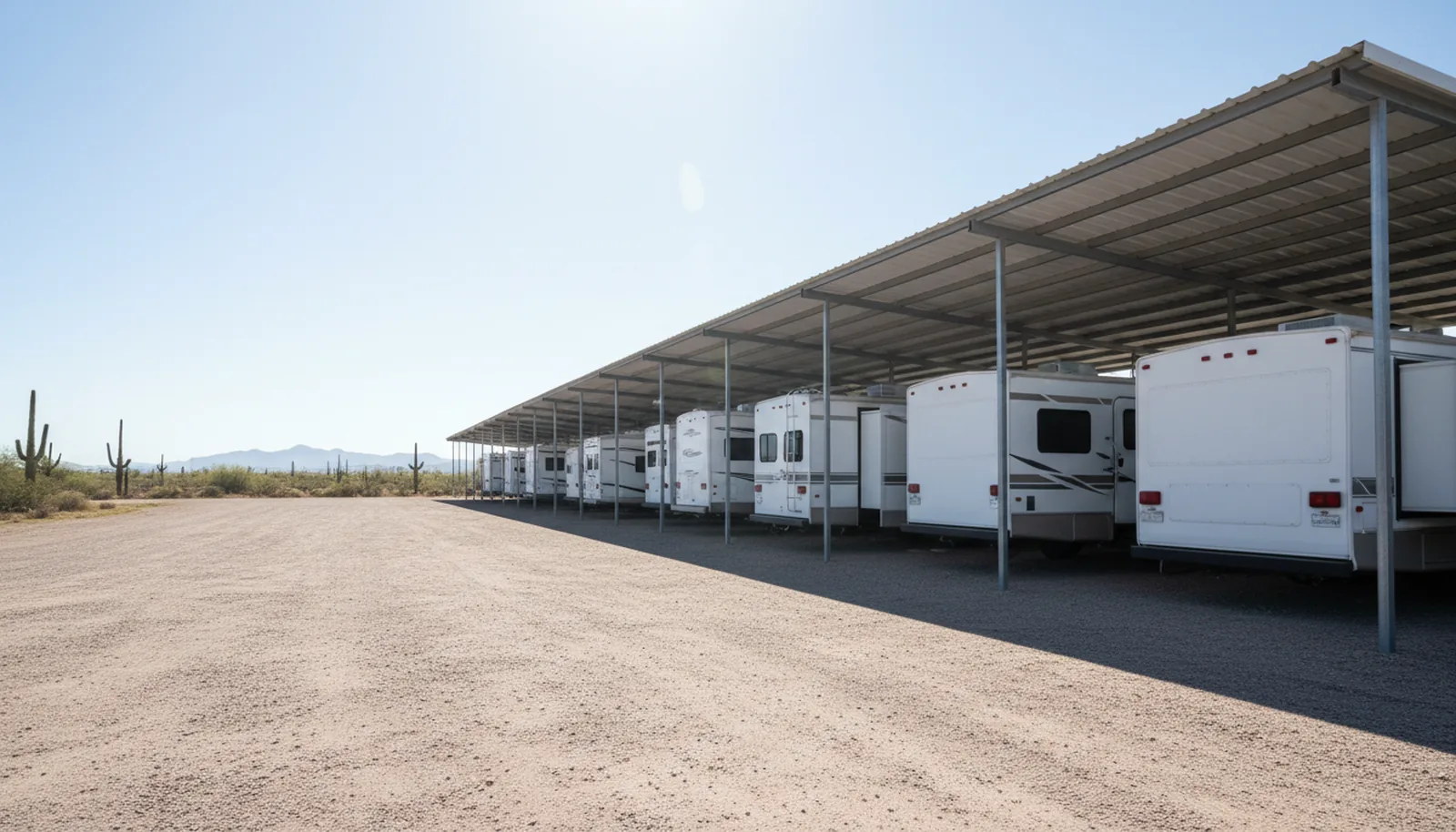
July in Mesa. 115 degrees at 4 p.m. I still check covered RV storage in Mesa every few months. I walked the rows at one covered lot with a tape measure, comparing beam heights, because the posted clearance is often measured at the eave, not the lowest beam. My 2014 Class A needs 13 feet at the AC shroud, so I checked indoor storage in Mesa for clearance too. One canopy advertised 14 feet. The actual beam read 12 foot 9. I walked away. Measure the lowest beam, not the brochure. The roof is only half the truth with covered storage, unlike the covered spots in Phoenix that at least give you some side protection. The sun still finds your rig.
What a steel canopy actually is
A covered RV space is an open-sided steel structure. Carport with a roof overhead. Sometimes there’s a wall or fence on one side. Usually it’s a long row of angled steel posts and metal roofing. No garage door. No climate control. Just shade from directly above.
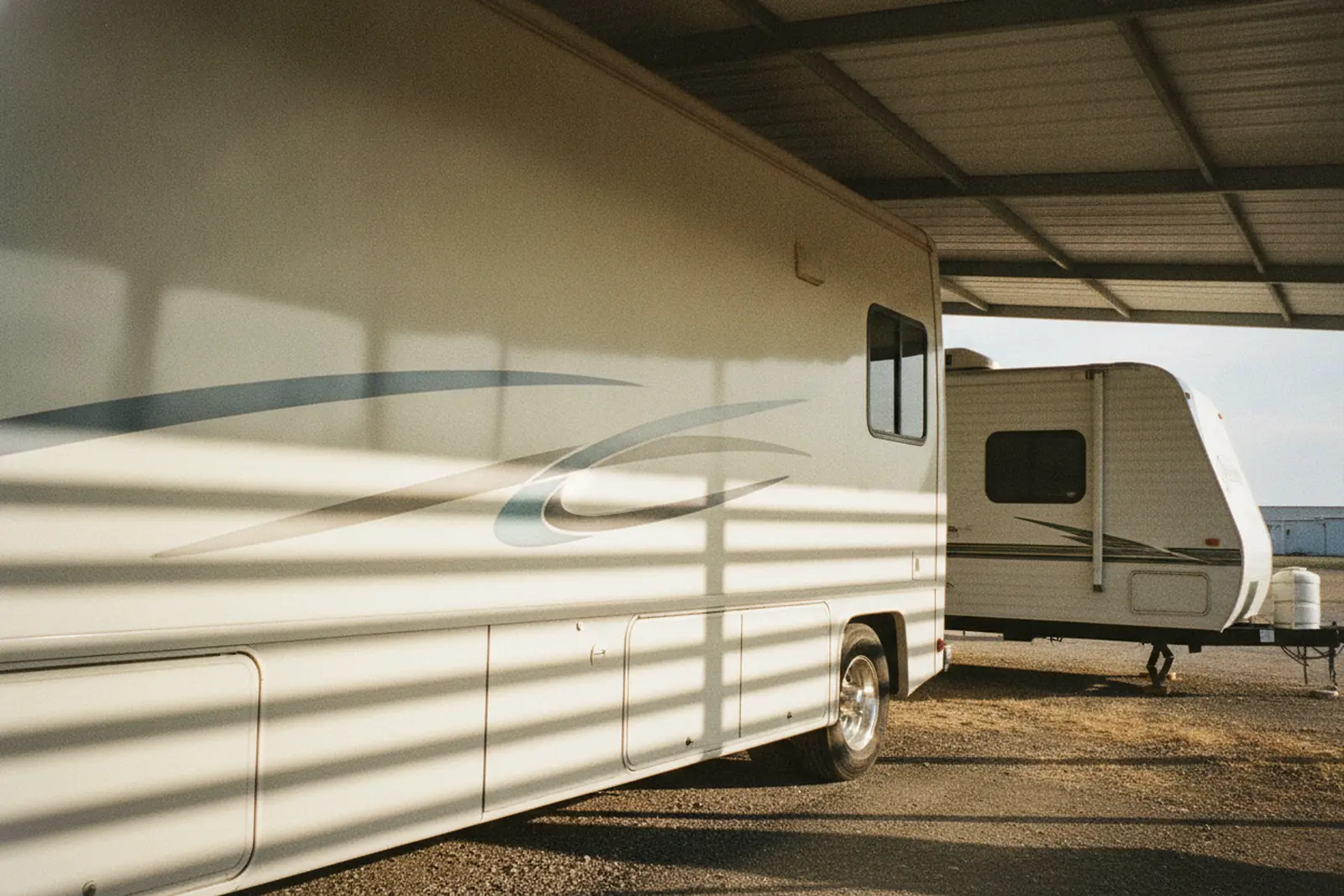
The roof stops midday UV. It blocks most hail and bird droppings. It does not stop the low morning and evening sun. My first covered space faced east, and the passenger side baked before noon; the tires on that side cracked first. I paid for shade. I got half a wall of sun.
Before you compare covered lots, look at RV storage across Arizona. Location drives price more than roof type, so check monthly parking in Mesa before you commit. A canopy space in Mesa isn’t the same price as one in Show Low, and covered storage in Tucson runs higher than both.
Clearance: measure the beam, not the brochure
Posted clearance is often measured at the eave, not the lowest beam. A low beam can shave six inches. Canopy clearance usually runs 12 to 16 feet. Sounds generous until you remember a fifth wheel or Class A can stand 13 feet 6 inches at the AC shroud.
My rule: if I can’t walk under the lowest beam with a 14-foot tape measure and still see daylight, I don’t rent the space, because a low beam can shave six inches off the posted clearance. And don’t assume the pull-thru lane matches the space. I’ve seen a 14-foot space with a 12-foot entrance. That hurts.
Compare covered RV storage in Phoenix and covered RV storage in Tucson. Ask both for beam height in writing. The answer tells you if the manager knows his own lot.
What a covered space costs
Covered storage sits between open lots and indoor units. Open lots run about $30 to $150 a month in most markets. Covered spaces run $75 to $300, usually $100 to $200. Indoor units start around $150 and go past $450. Prices climb with rig length. My 36-foot coach pays more than a 20-foot travel trailer.
When I compared monthly RV parking in Mesa, covered spaces ran about $40 to $60 more than open lots at the same facility. That’s the premium for a roof. Whether it’s worth it depends on your rig and your sun.
If you’re already paying for full indoor RV storage in Mesa, a canopy can feel like a downgrade. But if you’re leaving an open lot, the roof buys real protection.
Covered RV storage: end spaces vs middle spaces
Middle spaces get shade almost all day. Most covered lots have two end spaces per row. One faces east, one west. The east-facing end space gets morning sun on the passenger side. The west-facing end gets brutal afternoon sun.
My first covered space was an east-facing end. The sidewall decals faded and the tires on that side cracked early. I moved to a middle space two months later. Same canopy. Different outcome. I paid $10 more a month for the middle spot. Worth it.
When you tour a lot, stand in the space at 8 a.m. And again at 5 p.m. Watch where the sun falls. Then pick your slot.
When a canopy is worth it, and when it isn’t
A canopy earns its rent in desert sun. Rubber roofs degrade fast under UV. Sealant dries and cracks. AC shrouds turn brittle. A metal roof overhead stops most of that. Hail country is another good reason. A steel canopy stops golf-ball hail. It won’t stop a falling tree.
It’s not worth it for short storage under two months. The extra $40 to $60 a month doesnt buy back that fast. It’s also redundant if you already use a good breathable cover on the rig. A cover plus a canopy is overkill for most owners.
If you only need a spot for a few weeks, look at our post on RV storage ideas for cheaper alternatives. A gravel lot with a good cover might be the right call.
Open vs canopy vs canopy + cover
Here’s the honest comparison after three summers around Phoenix:
| Storage Type | Monthly Price Range | UV Protection | Hail Protection | Other Exposure |
|---|---|---|---|---|
| Open lot | $30–$150 | None | None | Full sun, dust, rain |
| Covered canopy | $75–$300 | Roof only | Most | Low-angle sun on sides, blowing dust, side rain |
| Canopy + breathable cover | $75–$300 + $150–$700 one-time cover cost | Roof + sides | Most | None serious |
I ran open lot my first summer. The roof sealant cracked and I paid $400 to reseal. Then I went canopy only. Better, but one side still baked. Last summer I added a breathable cover under the canopy. The rig stayed clean. The cover cost $250 and lasted two seasons.
If you go the cover route under a canopy, buy one that’s breathable. Not a plastic tarp. Trailers and motorhomes both benefit.
I found this video helpful when comparing open and covered storage options myself.
Snow load, wind, and the fine print
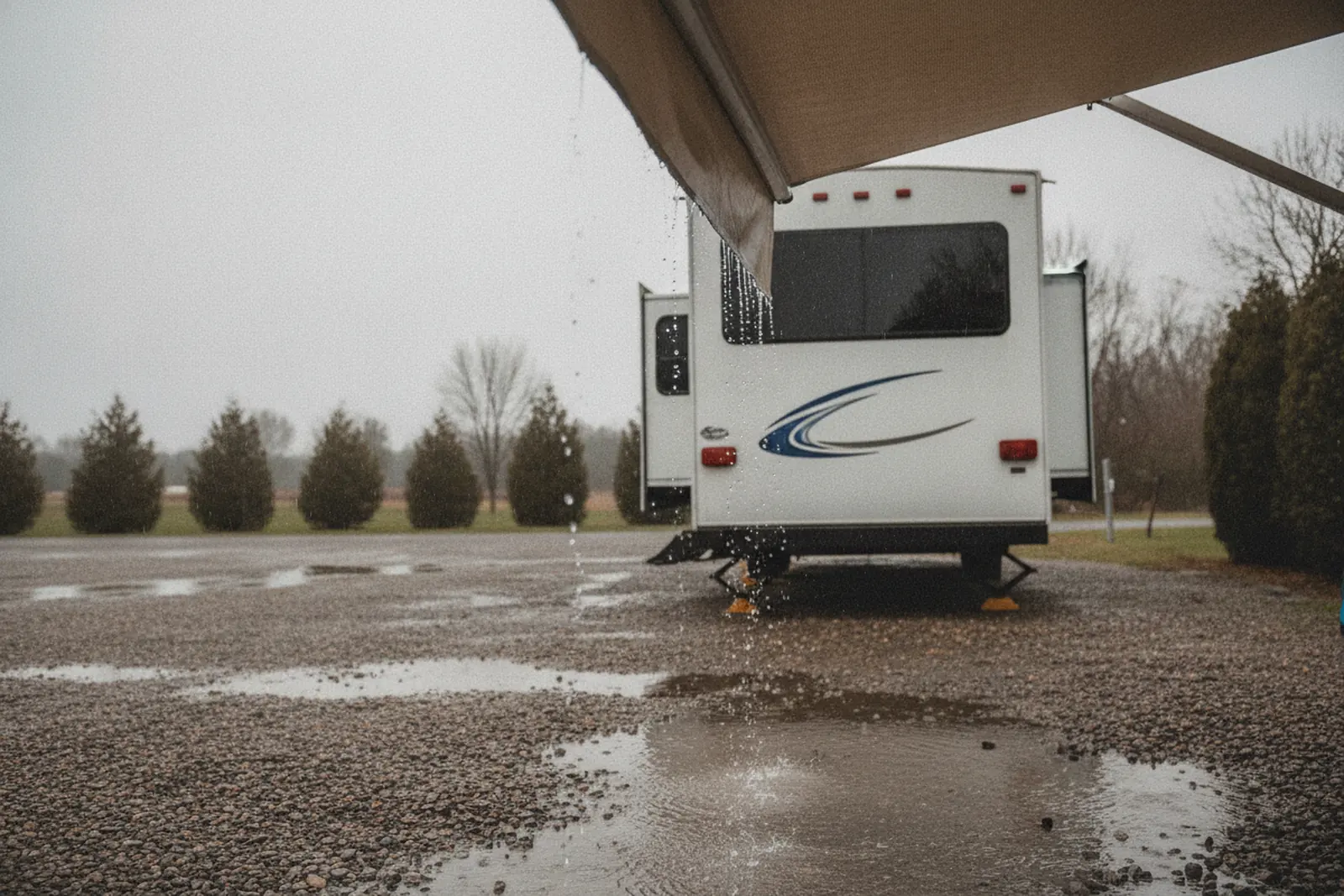
Canopies aren’t weather-proof in every state. In northern lots, snow can pile on the roof. A cheap canopy without proper snow load rating can fold. Ask if the structure is engineered for your area’s snow and wind. Many are not.
Wind is the other issue. Open-sided canopies funnel wind. A strong gust can rock a tall Class A. I’ve seen awnings ripped off in a covered space becuase the wind came in from the open side. Park nose-in or tail-in depending on prevailing wind.
Our post on indoor RV storage covers what you get inside a building, including the fine print on doors and deposits. If weather is your main fear, indoor beats canopy evry time. But it costs double.
My honest take after three summers
A canopy is a roof, not a garage. It’s the right buy for a full summer near Phoenix or Tucson. It’s the wrong buy for a month of winter storage in a mild climate. I’d spend the money on a good cover instead.
If I could redo my first year, I’d have leased a middle space from day one. The $10 extra was cheap against a set of tires at $300 each. And I’d have asked for the beam height in writing before signing anything.
This weekend, pull up covered RV storage in your city. Call three lots. Ask for the lowest beam height, the monthly rate for your rig length, and whether end spaces cost less. Then go stand in the space at the worst hour of the day. The sun will tell you the rest.
Related reading
FAQ
What is the difference between covered and indoor RV storage?
Covered storage is an open-sided canopy or carport with a roof. It blocks overhead sun and hail but leaves the sides exposed to low-angle sun, wind and blowing rain. Indoor storage is a fully enclosed unit or warehouse with walls and a door, protecting the rig from all weather. Indoor costs more,typically $150 to $450 a month versus $75 to $300 for covered.
How much does covered RV storage cost per month?
Typical covered RV storage runs $75 to $300 a month, with $100 to $200 being common. Prices depend on space length, location and demand. A 40-foot Class A space costs more than a 20-foot travel trailer space. Sun Belt metros and hurricane areas often have waitlists and higher rates. Prepaying 6 or 12 months usualy earns a discount.
What is the typical height clearance for a covered RV storage canopy?
Most canopies offer 12 to 16 feet of clearance, but the posted height may be measured at the eave, not the lowest beam. A Class A or fifth wheel often needs 13 feet 6 inches to clear the AC shroud. Always measure the lowest beam with a tape before renting. A space that is too low can damage the roof on entry.
Does a covered RV space protect against hail and sun?
A steel canopy protects against most hail and overhead UV. It blocks direct midday sun from the roof, preserving the rubber membrane and sealant. But low-angle morning and evening sun still hits the sidewalls and tires, causing fading and cracking. End spaces face more side sun than middle spaces. A breathable RV cover adds side protection.
Is it worth putting an RV cover on under a canopy?
Usually not neccessary, but it does help. A canopy stops overhead UV, but side sun, blowing dust and side rain still get in. If your lot is dusty or the space is an end space facing the sun, a breathable cover protects the finish and tires. Covers cost $150 to $700 and last a few seasons. Use a breathable fabric, never a plastic tarp.
Do RV storage canopies handle snow load?
Not all do. Cheap canopies in northern states can collapse under heavy snow if they weren't engineered for the local snow load. Ask the facility if the structure is rated for your area's snow and wind. In snow country, indoor storage or a carport with a certified snow load is safer. A canopy that folds can total the rig beneath it.
Find storage near you
Compare covered, indoor and open RV storage in your city, then ask a few places for their current monthly rate.
Browse by stateOr jump to: Covered RV storage · Houston, TX · San Antonio, TX · Las Vegas, NV