Enclosed RV Storage Units vs Shared Indoor Warehouse: Honest Comparison
By Marcus Bell · November 1, 2026
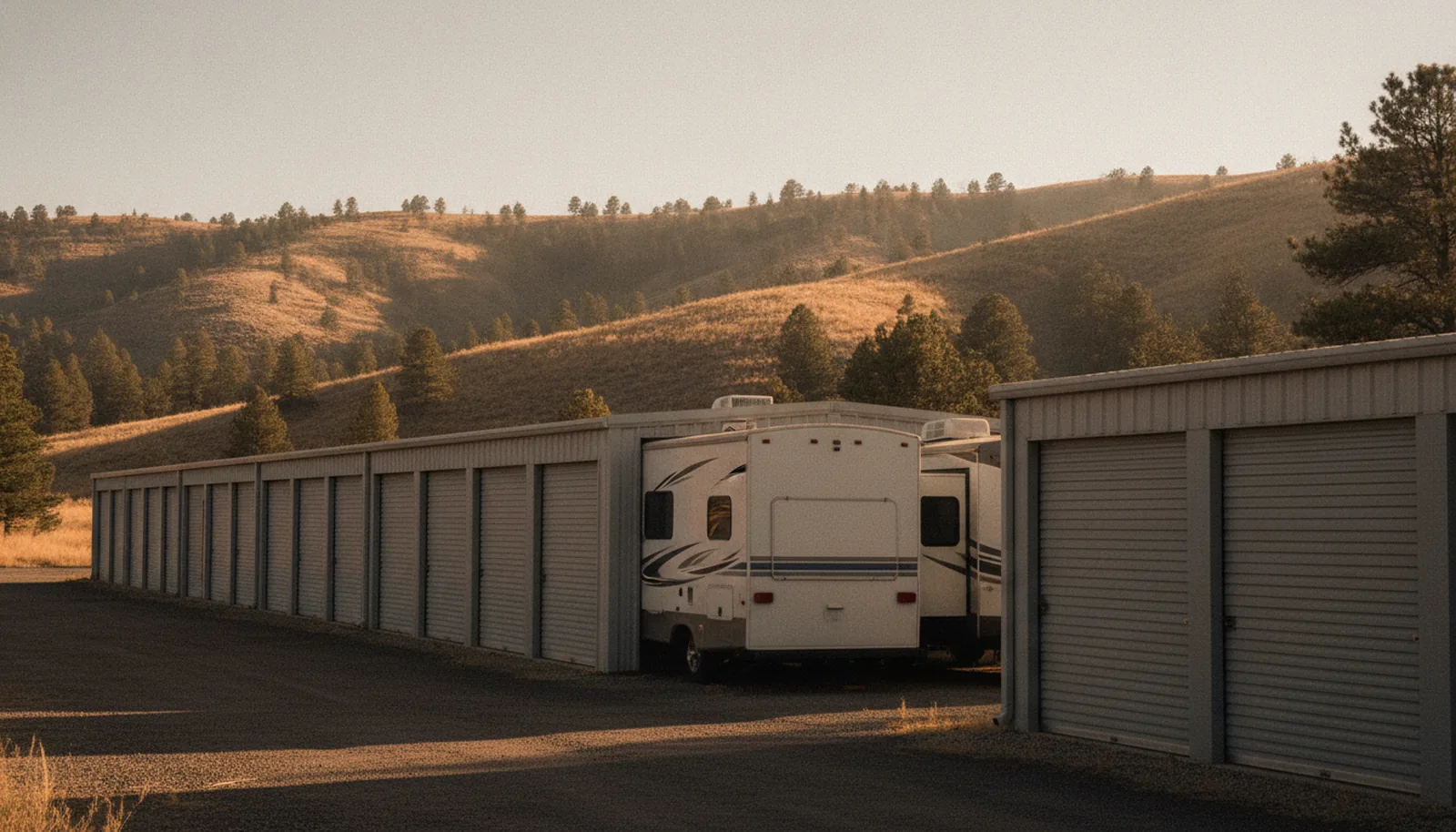
Last January I pulled my fifth wheel into a shared indoor warehouse on the east side of Colorado Springs because the forecast called for a week straight of single digits, and I’d been comparing RV storage across Colorado for weeks. Forty feet back from the roll-up door, a staffer in a golf cart was moving a Class A with about six inches of clearance on each side, which reminded me why I’d been researching climate controlled RV storage in Denver for a friend. (I still check indoor RV storage in Denver every few months.) That’s when I started comparing the price of a private enclosed unit against the risk of somebody else’s mirror meeting my fiberglass. Indoor RV storage in Denver and the Springs comes in two flavors, and they are not the same as what you get with covered RV storage in Denver. One gives you a key and a door that only opens for you. The other puts your rig in a room full of other people’s mistakes. I’ve paid for both.
If you’re comparing monthly RV parking in Denver, the first question isn’t whether the building has a roof. It’s whether the lease makes you responsible for damage you didn’t cause, which is a risk I’ve seen more often with outdoor RV storage in Denver. I’ll break down what I’ve seen on both sides of that counter.
What exactly is an enclosed RV storage unit?
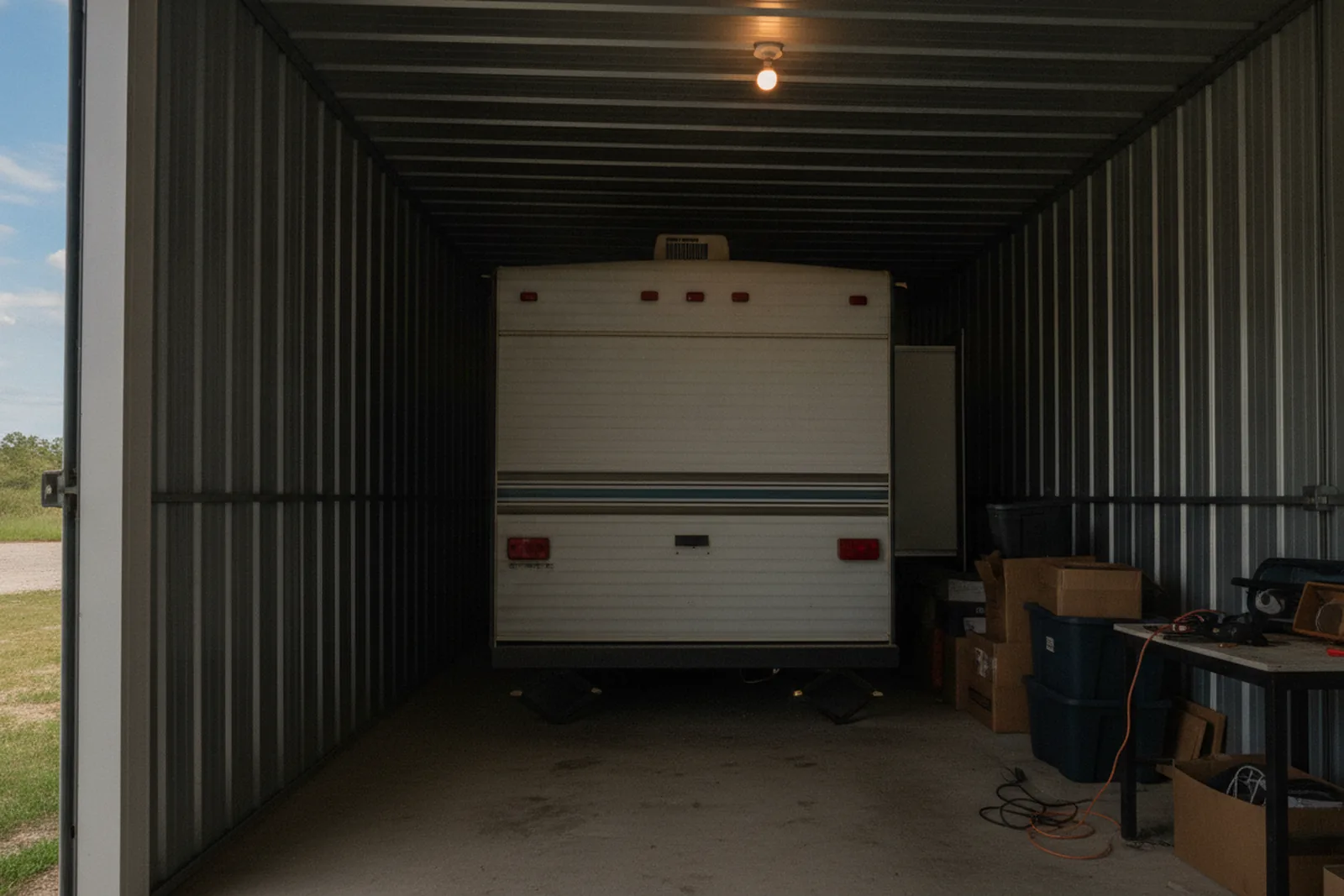
An enclosed RV storage unit is a private, garage-style bay with your own roll-up door, usually 12 to 14 feet tall and 10 to 14 feet wide. You get a key or a personal gate code, and nobody else’s rig shares your square footage. Most enclosed units for RVs come in lengths of 20 to 50 feet, so a 34-foot fifth wheel fits with room to walk around the front, tho you should measure your rig’s length and confirm the bay before signing. Some units have a 110-volt outlet inside for a battery maintainer, but that’s an extra you have to ask about.
I first looked at enclosed units when a hail storm marched thru the Pikes Peak region and left a friend’s Class C looking like a golf ball.
If you want to understnad how a true enclosed unit differs from a basic parking stall, our post on RV storage units covers door heights, turning room, and the fine print that matters most.
How a shared indoor warehouse actually works
A shared indoor warehouse is one big building, often a converted distribution center or a purpose-built metal structure, with lanes painted on the floor. Staff park your RV for you, or they guide you into a spot with an escort vehicle. The doors are usually big freight doors that open on a schedule, not on your schedule. You don’t hold a key to the building; you check in at the office.
The appeal is simple: a roof, four walls, and a lower monthly rate than a private enclosed unit.
What you give up is control. I’ve seen the damage log. More on that in a minute.
Enclosed RV storage units vs a shared indoor warehouse: key differences
Let’s put the two side by side.
| Factor | Private enclosed unit | Shared indoor warehouse |
|---|---|---|
| Privacy | You’re the only one with access. | Staff and other tenants’ rigs share the building. |
| Who touches your rig | Only you, unless you hand over a key. | Staff may move it, park it, or work around it. |
| Access hours | Usually 24/7 with your own code, sometimes limited by gate. | Often business hours only, or with advance notice. |
| Power outlet | Sometimes included or available for a fee. | Rare, and often off-limits for tenant use. |
| Light maintenance | Often allowed inside your own bay, within lease limits. | Usually prohibited; no room to work safely. |
| Fire and propane rules | Propane off, but a single bay is less complex if something leaks. | Staff may check propane; building evacuation is a bigger deal. |
| Insurance and liability | Lease still caps facility liability; your comprehensive covers loss. | Same, plus you may sign a waiver for staff to move the rig. |
| Typical monthly cost | $150 to $450+ depending on length and metro. | $150 to $350, with climate-controlled higher. |
One thing the table can’t show is the feel of a building. A private unit with a 14-foot door and a concrete floor feels like a garage you’re renting. A shared warehouse feels like an airport hangar with someone else’s Class A six feet from your bedroom slide.
The two claims I still think about
In my years around RV storage, two losses stuck with me.
The second came from a private enclosed unit, the kind with your own roll-up door. The owner had parked his Class A in the same unit for three winters. The roof had a small seam failure where the front cap met the roof membrane. It leaked slowly for months, running down behind the cab-over bunk. By the time he found the water stain inside the cabinet, the damage was structural: rotted luan, a sagging ceiling panel, mold in the insulation, that claim paid out over $11,000, and the insurer paid because he had comprehensive, but check your own policy for exclusions. The lesson there had nothing to do with the storage type and everything to do with checking the roof before you park it and once a month after.
Those two files taught me one thing: the building’s walls don’t decide who pays. The lease and your own policy do.
Check the lease before you hand over a key
Every storage lease I’ve read has a paragraph that surprises people.
That means your own comprehensive coverage on the RV is the real protection. If you have a motorhome, you need comprehensive and sometimes a storage or lay-up endorsement that suspends collision while keeping fire, theft, and vandalism coverage.
Most facilities will offer a tenant protection plan for an extra $10 to $30 a month. Read the cap. It’s often $5,000, which wont replace a $45,000 fifth wheel, and remember these plans are usually not insurance.
If the lease bans working on the rig, beleive it. A private enclosed unit might allow tire checks, battery maintenance, and minor repairs inside your own bay. A shared warehouse almost never does. I once saw a guy asked to leave a facility for changing a wiper blade outside his unit. Rules are rules.
I found this barn tour helpful when I was weighing enclosed storage against a shared warehouse.
What it costs, and what you actually get
In Colorado Springs, a private enclosed unit long enough for my 34-foot fifth wheel runs about $280 to $380 a month.
For that extra $100 a month, a private unit buys you control. To me, that’s worth real money because I do my own maintenance and I hate being told I can’t enter the building on a Sunday.
But a shared warehouse buys you cost per square foot. If you only need a roof and a locked door, a shared building in a dry climate might be fine. Just check the door height, the lane width, and how they move rigs when you’re not there. If you need more ideas on where to keep the rig, our post on RV storage ideas covers private lots, peer-to-peer spaces, and the HOA workaround I used for two years.
My honest judgement after three winters
I’ve paid for a private enclosed unit for the last two winters.
The private unit has a 14-foot door, a 110-volt outlet I wired a battery maintainer into, and a floor I can lay a creeper on. It costs $335 a month plus a $25 admin fee I paid once, which is within the typical range for this area. I check the roof each month because my own two eyes are the only maintenance crew. That’s the trade. You pay for the walls and the quiet, but you also take on the watching.
If you’re comparing indoor storage near you, call three places and ask for a copy of the lease before you visit. Look for the liability section and the access hours. Then decide if the extra hundred dollars buys you sleep or just a door.
Do this before you sign up
Take a flashlight and a tape measure to the facility. If the answer is ‘the tenant,’ walk.
If its a private enclosed unit, bring your RV’s true length, including the hitch and rear ladder, and compare it to the unit’s posted dimensions. Stand inside the bay with the door down and make sure you can open your entry door, walk the roof line, and reach the battery. Then read the lease’s insurance clause aloud. If it says the facility isn’t responsible for loss or damage, your own comprehensive policy is the only thing between you and a very expensive spring.
Check indoor enclosed RV storage rates in your own city this week. The good ones have waitlists before snow flies.
If you’re still deciding
FAQ
What is the difference between an enclosed RV storage unit and a shared indoor warehouse?
An enclosed unit is a private garage-style bay with your own roll-up door and lock. A shared indoor warehouse is one large building where many RVs park together, offen moved by facility staff. Enclosed units cost more, typically $150 to $450 a month, while shared warehouses run $150 to $350. You control access in a private unit; staff may move your rig in a shared building.
Does enclosed RV storage protect my RV from hail?
Yes, a fully enclosed building with a roof and walls protects against hail, falling branches, and sun. A covered canopy only shields from overhead hail. Enclosed units also reduce UV damage and keep the rig cleaner. For full protection, verify the building has no leaks and the door seals tightly.
Can I work on my RV inside an enclosed storage unit?
Many private enclosed units allow light maintenance like checking tires, charging batteries, and inspecting the roof. Some prohibit repairs due to insurance rules or local codes. Always read the lease before you sign. Shared warehouses rarely allow any work because of space and safety concerns.
Is enclosed RV storage worth the extra cost?
It depends on how often you access the rig and the local climate. In hail-prone areas like Colorado, enclosed units prevent costly damage. You also get privacy and control over who touches the RV. If you store for months and rarely visit, a shared warehouse may save $100 to $150 a month with similar weather protection.
Do I need RV insurance if I store my RV indoors?
Yes. The facility's insurance does not cover your RV. A fire, theft, or vandalism loss falls on your comprehensive coverage. Many storage leases require proof of insurance and may charge an extra fee if you can't show it. For a towable, you need physical damage coverage on the trailer itself.
What size enclosed unit do I need for a travel trailer?
Measure the trailer's length from the hitch coupler to the rear bumper, including the spare tire. Common unit lengths are 20, 30, 40, and 50 feet. Add at least 5 feet to the RV's length for walking around, but measure your rig's length first. Door height should clear the roof AC unit, usualy 12 to 14 feet, but check the posted clearance and allow a few inches of margin.
Can I keep my RV plugged in inside an enclosed storage unit?
Some enclosed units have a 110-volt outlet for a battery maintainer, but many do not. If power is important, ask before renting. You can't run the roof AC or use the unit as a workshop. For a battery maintainer, you may need to provide your own extension cord rated for the run length.
Find storage near you
Compare covered, indoor and open RV storage in your city, then ask a few places for their current monthly rate.
Browse by stateOr jump to: Indoor RV storage · Phoenix, AZ · Jacksonville, FL · Austin, TX